Mamata Banerjee Refuses to Resign After Bengal Loss
West Bengal Chief Minister Mamata Banerjee questioned the election process after her party suffered a major defeat to the BJP


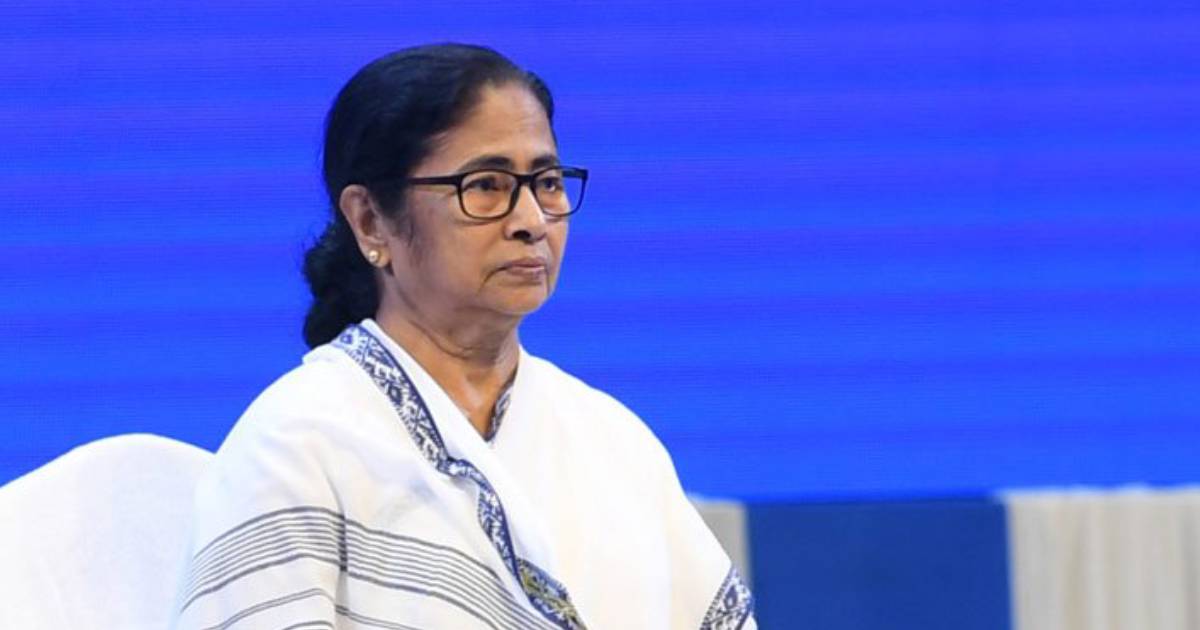
Mamata Banerjee has said she will not resign as Chief Minister of West Bengal despite her party’s heavy defeat in the state election, triggering a fresh political and constitutional debate in India.
The Trinamool Congress leader rejected calls for her resignation after the Bharatiya Janata Party secured a decisive majority in the assembly election.
Banerjee also lost her own seat in Bhabanipur, but insisted the outcome did not reflect a fair contest and accused election authorities of failing to ensure a proper voting process.
Her remarks came after the BJP won 207 seats in the state assembly, while the Trinamool Congress, which had governed West Bengal for 15 years, was reduced to just 80 seats.
The result marks one of the biggest political shifts in the state in recent years and has intensified questions over the future leadership of the outgoing government.
Banerjee Refuses to Step Down After Defeat
During a press conference on Tuesday, Mamata Banerjee said she would not leave office simply because opponents demanded it. She argued that the election outcome was influenced by unfair practices and claimed there was no valid reason for her resignation.
Banerjee stated that if there had been genuine proof of defeat under fair circumstances, she would have considered stepping down. However, she maintained that political pressure alone could not force her out of office.
The outgoing chief minister also accused the Bharatiya Janata Party of manipulating the electoral environment and claimed the Election Commission failed in its responsibilities during the voting process.
Her comments immediately sparked criticism from political rivals and renewed discussion about constitutional procedures following an election defeat.
BJP Secures Clear Majority in West Bengal
The Bharatiya Janata Party emerged as the dominant force in the West Bengal assembly election by winning 207 seats, enough to comfortably form the next government in the state.
The Trinamool Congress, which had remained in power for more than a decade and a half, suffered a major setback with only 80 seats. The scale of the defeat has been viewed as a dramatic reversal for Banerjee’s party, which had previously maintained a strong political position in the state.
Banerjee herself lost the Bhabanipur constituency, adding further pressure on her leadership following the election results.
Political observers say the outcome has changed the balance of power in West Bengal and could reshape the state’s political landscape in the coming years.
Accusations Against Election Authorities
Following the election result, Banerjee directed strong criticism toward the Election Commission and accused the body of failing to conduct the process fairly.
She claimed the election had been influenced by irregularities and suggested that democratic standards were not properly upheld during the campaign and voting period.
Although she did not announce any immediate legal action, Banerjee indicated that her party would discuss its future course internally before deciding on the next political strategy.
She also warned that the Trinamool Congress would return to the streets to protest what she described as political oppression by the BJP.
- The BJP won 207 seats in the assembly election
- The Trinamool Congress secured 80 seats
- Mamata Banerjee lost the Bhabanipur constituency
- Banerjee accused election authorities of unfair conduct
- The outgoing chief minister refused to resign voluntarily
BJP Calls Statement Unconstitutional
The Bharatiya Janata Party strongly criticized Banerjee’s remarks and described her refusal to resign as both unreasonable and unconstitutional.
Party spokesperson Debajit Sarkar said anyone who respects democratic institutions and constitutional values should accept the verdict delivered through elections.
The BJP argued that once a party loses majority support in the assembly, continuing in office without political legitimacy becomes difficult to justify.
The criticism from the BJP added further tension to an already heated political environment in West Bengal after the election result.
Party leaders also maintained that the transition of power should happen according to constitutional procedures and democratic norms.
What the Constitution Says About the Chief Minister’s Position
The debate surrounding Banerjee’s remarks has brought renewed attention to constitutional provisions related to the office of chief minister in India.
Under Article 164 of the Indian Constitution, a chief minister remains in office at the pleasure of the governor. However, constitutional experts note that this principle is linked to majority support inside the legislative assembly rather than personal preference.
Once election results establish a new majority, the governor is expected to invite the leader of that majority to form the government.
Legal experts say that even if a sitting chief minister does not immediately resign, the governor has constitutional authority to dismiss the council of ministers if it no longer enjoys majority support in the assembly.
As a result, remaining in office after clearly losing majority backing becomes practically difficult under the constitutional framework.
Assembly Term and Transfer of Power
Another important constitutional provision connected to the issue is Article 172, which states that a state legislative assembly has a five-year term.
After fresh elections are completed and a new mandate is delivered by voters, the previous assembly’s term effectively comes to an end. This creates the basis for the formation of a new government under the updated electoral mandate.
Constitutional lawyers say the position of chief minister depends entirely on the confidence of the majority in the assembly. If that support disappears after an election, there is little legal ground for continuing in office.
According to legal experts, the question of refusing resignation is therefore more political than legal in nature.
They argue that, in the end, constitutional procedures require power to be transferred to the leadership that commands majority support in the newly elected assembly.
Political Uncertainty Continues in the State
Banerjee’s refusal to step down has added uncertainty to the political transition in West Bengal following the election.
While the BJP prepares to form the next government with its clear legislative majority, the Trinamool Congress appears ready to challenge the result politically rather than quietly accept defeat.
The situation has also intensified debate over democratic accountability, the role of constitutional institutions and the responsibilities of elected leaders after losing public support in an election.
For now, all attention remains focused on how the governor and political parties move forward in implementing the constitutional process of government formation in West Bengal.


Written by Roshan Shrestha
Roshan Shrestha is a Nepali investigative journalist and founder of Khoj Samachar, covering corruption, transparency, and public-interest issues.

Is It Illegal for Nepalis to Get an Aadhaar or PAN Card in India?

Germany: Six died in Stade Shooting

Neymar Gives $250K for Venezuela Earthquake Victims
Kolkata Warehouse Collapse Update: 5 Dead, 2 Arrested

Colombia Beat Uzbekistan 3-1 in World Cup Opener

6.7-Magnitude Earthquake Shakes Indonesia’s Sulawesi

Saudi Arabia vs Uruguay Ends 1-1