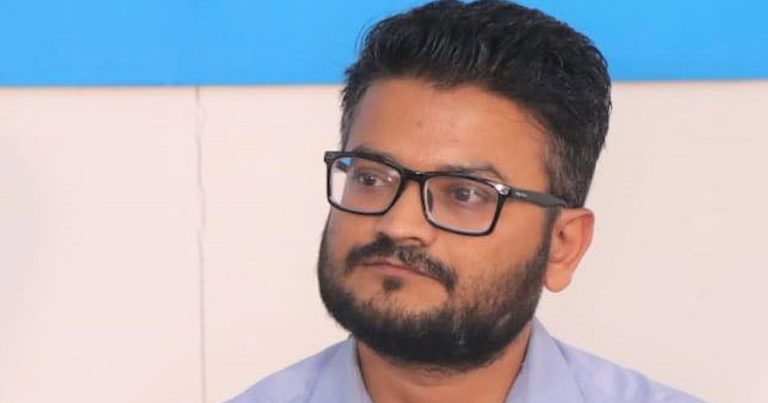
Sudan Gurung, the founder of the civic movement “Hami Nepal,” who rose to national prominence following the GenZ Movement, is set to formally join the Rastriya Swatantra Party on Tuesday.
Gurung had been actively involved in social service initiatives through Hami Nepal long before the GenZ Movement brought him into the political spotlight. In the post-movement period, he emerged as a key figure advocating for political accountability and played a notable role in connecting emerging political forces, including Rabi Lamichhane and Balen Shah, according to close observers of the movement.
Earlier today, Gurung announced his decision through a Facebook post, stating that he and Kathmandu Metropolitan City Mayor Balen Shah would officially join the Rastriya Swatantra Party at 3:30 PM.
“This decision is not driven by personal ambition or power,” Gurung wrote. “It is a response to public expectation and responsibility. The time has come to institutionalize the accountability, direction, and results people have been demanding. Public interest will remain the top priority, the trust of the youth will be safeguarded, and change will be made sustainable. This journey moves forward together with you.”
In the same post, Gurung referred to his political plan as ‘Mission Gorkha–1,’ signaling his intention to contest the upcoming parliamentary election from Gorkha Constituency No. 1. The constituency is also his birthplace, which he says strengthens his commitment to represent the region.
Meanwhile, Mayor Balen Shah is preparing to contest the election from Jhapa–5, according to sources close to the development. The formal party entry of both figures is expected to take place later today. Their move is being closely watched, as it signals a potential shift in Nepal’s evolving political landscape, particularly among younger voters seeking alternative leadership and institutional reform.