Prime Minister Sushila Karki has emphasized that infrastructure development projects must not undermine religious beliefs or damage cultural heritage.
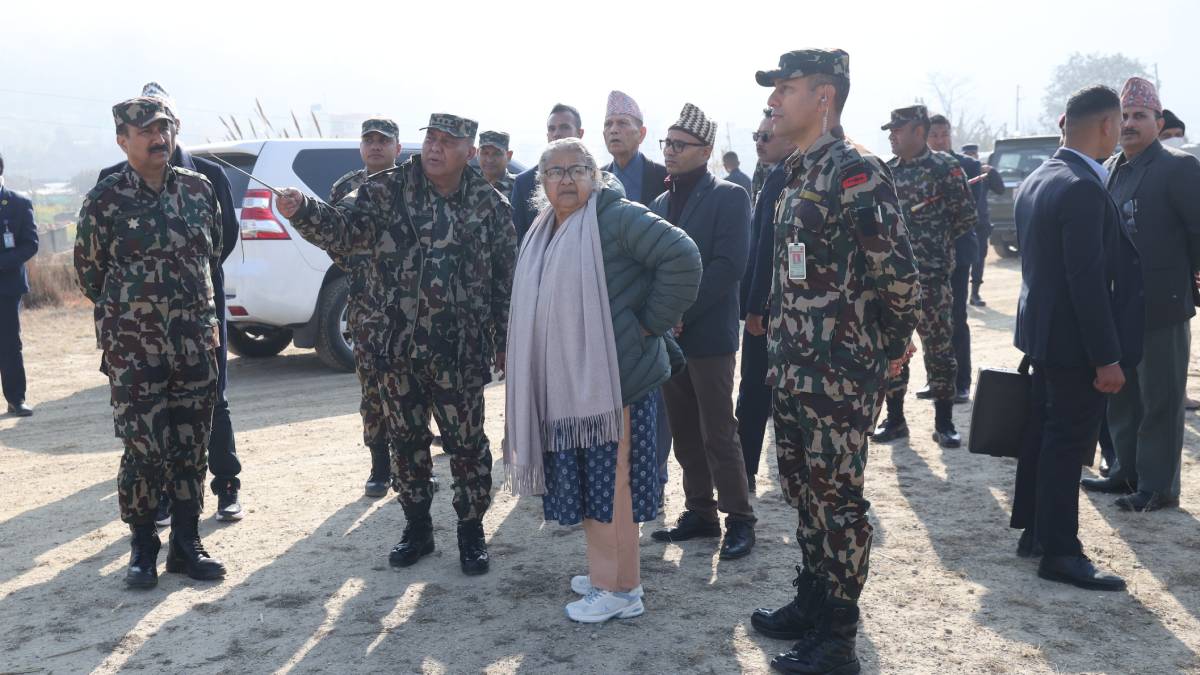
While inspecting the Kathmandu–Tarai Madhesh Fast Track, a national pride project of high priority, Prime Minister Karki made the remarks during a program organized by the road construction task force in Khokana, Lalitpur, on tuesday. She instructed concerned authorities to take local concerns seriously and work toward practical solutions.
“The concerns of local residents must be addressed with seriousness, and solutions must be sought accordingly,” Prime Minister Karki said. “If necessary, we should be prepared to revise alignments and even change zero points. Development activities must move forward without harming people’s beliefs.”
She also stressed the need to ensure adequate open space while constructing physical infrastructure. Highlighting the importance of open areas, the Prime Minister said such spaces are essential during natural disasters, for people’s movement, and for social, cultural, and religious gatherings, including festivals and fairs.
“Open spaces are crucial during emergencies and for public gatherings,” she said. “The mindset that every vacant space must be filled with structures needs to change. Planning should be done in a way that preserves sufficient open areas from the outset.”
Project Progress and Briefing to the Prime Minister
Earlier, Chief of the Army Staff Ashok Raj Sigdel and Project Chief Dharmendra Jha briefed Prime Minister Karki on the project’s progress and existing challenges.
The Kathmandu–Tarai Madhesh Fast Track is being constructed under the management of the Nepali Army. The project experienced initial delays due to the time required for approval of the Detailed Project Report (DPR). However, overall physical progress has now reached approximately 45 percent.
Fast Track Features, Timeline, and Expected Impact
The fast track has a total length of 70.977 kilometers and requires the construction of more than 87 bridges. Some of these are special structures, including bridges as tall as 82 meters. The Army said construction of such bridges has reached the final stage.
According to the Nepali Army, the project is being implemented with a target completion date of the end of Chaitra 2083 BS, within the initial estimated cost of NPR 213 billion.
Once completed, the fast track will provide the shortest direct highway link between the Kathmandu Valley and the central Tarai region. The project is expected to significantly reduce transportation time and logistics costs for goods transported from the Tarai to Kathmandu, contributing substantially to the country’s economic development.
The project also includes seven tunnels. The Nepali Army said it is making special efforts to complete the project in line with its stated targets.