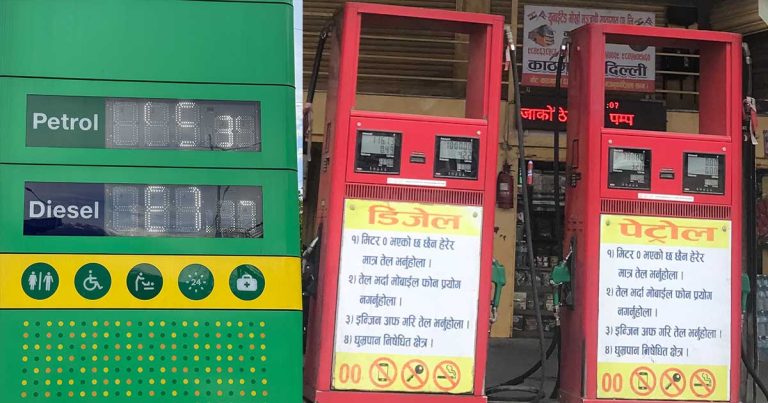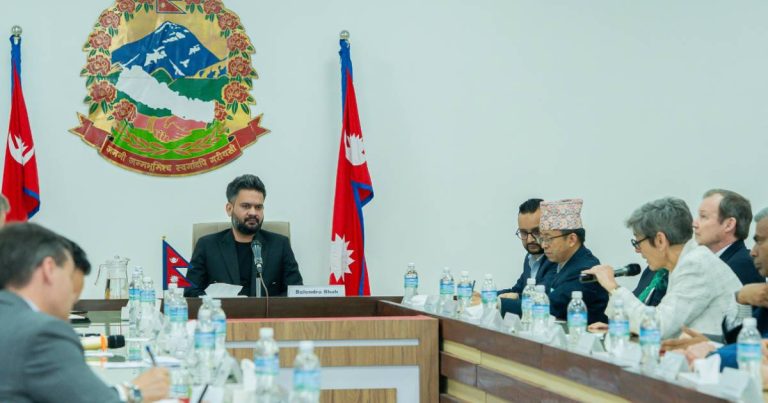
Nepal has recently found itself at the center of a growing public debate over fuel prices, with petrol and diesel now among the most expensive in South Asia.
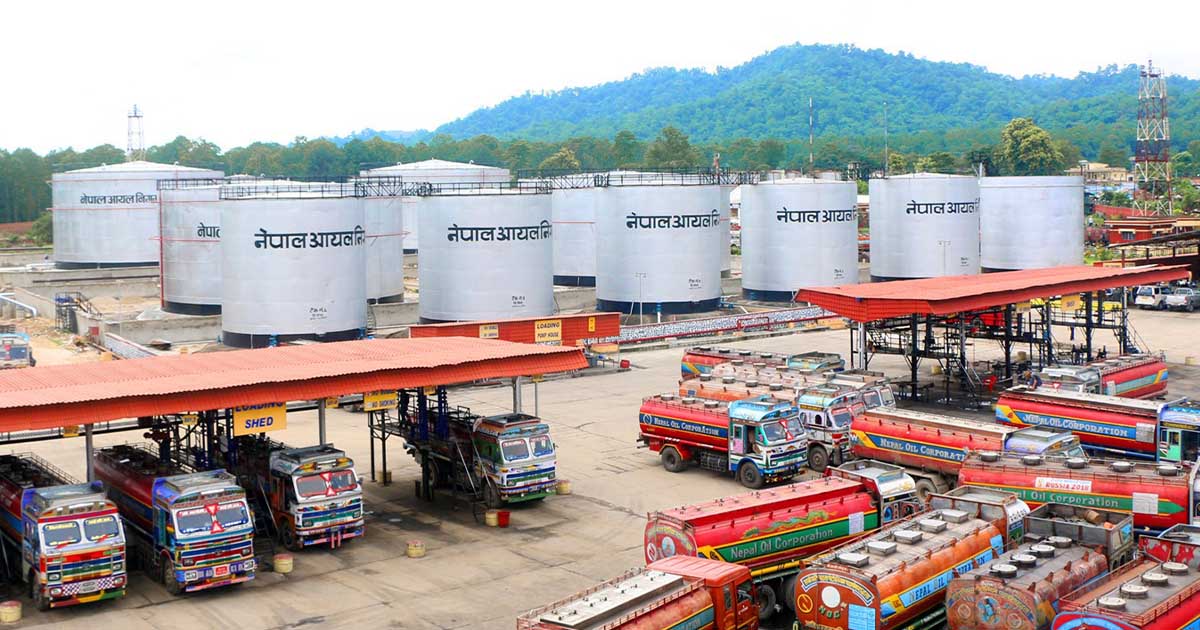
In response to media reports, the Nepal Oil Corporation (NOC) said the country’s reliance on imported refined fuel — due to the absence of a domestic refinery — is a key reason behind the high prices. It also urged the public not to be misled by what it described as “misinformation”.
But a closer look at available data and regional comparisons suggests the issue may be more complex. Based on reporting and publicly available figures, here are five key questions that continue to be raised.
A detailed breakdown of Nepal’s fuel pricing had earlier been reported here —Nepal petrol and diesel prices highest in South Asia.
How does Nepal compare with its neighbours?
Two countries often cited in comparison are Bhutan and Maldives. Like Nepal, both rely on imported refined fuel rather than domestic refining.
Yet, their retail prices are significantly lower.
- Maldives: Petrol ~ NPR 153.78 per litre
- Bhutan: Petrol ~ NPR 164.68 per litre
- Nepal: Petrol ~ NPR 219 per litre
For diesel:
- Bhutan: NPR 157.31 per litre
- Maldives: NPR 168.47 per litre
- Nepal: NPR 237 per litre
These figures raise an immediate question — if all three countries import refined fuel, why is Nepal significantly more expensive?
Does the refinery argument fully explain the price gap?
NOC attributes high prices to the lack of domestic refining. However, Bhutan and Maldives also import refined fuel. Bhutan, like Nepal, is landlocked, suggesting that geography alone may not fully explain the difference.
Why don’t prices fall when global rates drop?
On 17 April, global crude oil prices fell sharply — from $99.6 to $87.75 per barrel, a drop of around 11.7%.
Despite this, retail fuel prices in Nepal were not reduced in the same proportion. NOC has said that domestic prices follow adjustments made in India every 15 days.
However, data published by the corporation itself shows that prices have, at times, been increased within shorter intervals — sometimes within 7 to 10 days.
This has led to questions about whether price increases and decreases are being applied consistently.
Why is Nepal still dependent on a single supplier?
Nepal currently imports fuel almost entirely from India. Following the 2015 blockade, an agreement was signed with China to explore alternative fuel supplies.
More than a decade later, that agreement has yet to be implemented, raising concerns about long-term supply diversification.
How transparent is the pricing system?
Another concern relates to transparency. The exact per-litre purchase price of petrol and diesel from India is not publicly disclosed in detail.
At the same time, multiple layers of taxes are added to the final retail price. Despite this, questions persist about why the state-owned corporation has struggled to maintain consistent financial stability.
What about the price stabilisation fund?
Reports suggest that Nepal Oil Corporation holds a price stabilisation fund estimated at around NPR 20 to 22 billion. The fund is intended to cushion consumers during periods of high prices.
However, its limited use in the current context has raised further questions. Similar concerns have also been highlighted in a report by Onlinekhabar.
Why it matters
Fuel prices affect more than just motorists. Higher transport costs ripple through the economy, pushing up the prices of food, goods and essential services.
As a result, the issue is not only about energy policy — it has a direct impact on everyday living costs.
While authorities have offered explanations, the data continues to prompt questions. For many, clearer answers and greater transparency will be key to restoring public trust.