Tea has long been one of Nepal’s most important export commodities, sustaining entire communities across the eastern hills and bringing in valuable foreign currency each year. That export chain is now under severe strain. Tea entrepreneurs say a new import procedure imposed by India has disrupted trade, forcing dozens of factories to shut down and pushing many more toward closure, with workers and farmers bearing the immediate impact.
According to tea industry representatives, 53 tea factories across Nepal have already closed, while another 33 are at risk of shutting down if the situation continues. More than 100,000 workers and over 30,000 farmers have been directly affected.
The crisis comes at a time when Nepal’s tea sector remains heavily dependent on a single market. Industry figures say the disruption has exposed a longstanding vulnerability that threatens not only businesses but also rural livelihoods tied to tea cultivation and processing.
Indian Import Procedure Hits Tea Exports
Tea entrepreneurs say India has been creating obstacles to Nepali tea exports for the past month through a newly enforced Standard Operating Procedure (SOP).
Previously, tea shipments entering India moved relatively smoothly, with only selected consignments undergoing testing when concerns arose. Under the new arrangement, every truck carrying tea must undergo laboratory testing before being allowed into the market.
Industry representatives say the testing process can take between 15 and 20 days. As a result, Indian buyers have largely stopped purchasing Nepali tea.
They insist the problem is not related to the quality of Nepali tea. Nepali tea continues to be exported to countries including Germany, France, Japan and the United States, markets known for strict quality requirements.
Factories Close, Stocks Pile Up
Nepal exports more than 15 million kilograms of tea annually and earns over Rs 4.25 billion in foreign currency from the sector.
Business owners say warehouses are now filled with unsold tea because exports to India have slowed dramatically.
The impact has spread quickly through the production chain. Workers have lost jobs, farmers are struggling to sell their harvests, and factory operators say continuing operations has become increasingly difficult.
Heavy Dependence on India Exposed
Around 90 percent of Nepal’s tea exports are destined for India, while the remaining share is exported to countries such as Germany, France, Japan and the United States.
That dependence has made the industry particularly vulnerable to policy changes across the border.
Tea entrepreneurs argue that the current situation demonstrates the need for Nepal to diversify export destinations and reduce reliance on a single market. While alternative international markets exist, building those markets takes time and sustained government support.
Industry Accuses Government of Delayed Response
Tea business operators say they alerted the government and relevant agencies about the problem more than a month ago and requested intervention.
They claim no meaningful action was taken in time, leaving factories with little choice but to halt operations.
Industry representatives are now urging the Nepal government to engage directly with the Indian government at the government-to-government level and seek an immediate resolution.
Why Orthodox Tea Matters
Nepal primarily produces two types of tea: Orthodox tea and CTC tea.
CTC (Crush, Tear, Curl) is the granular tea commonly consumed by most Nepali households and is generally more affordable.
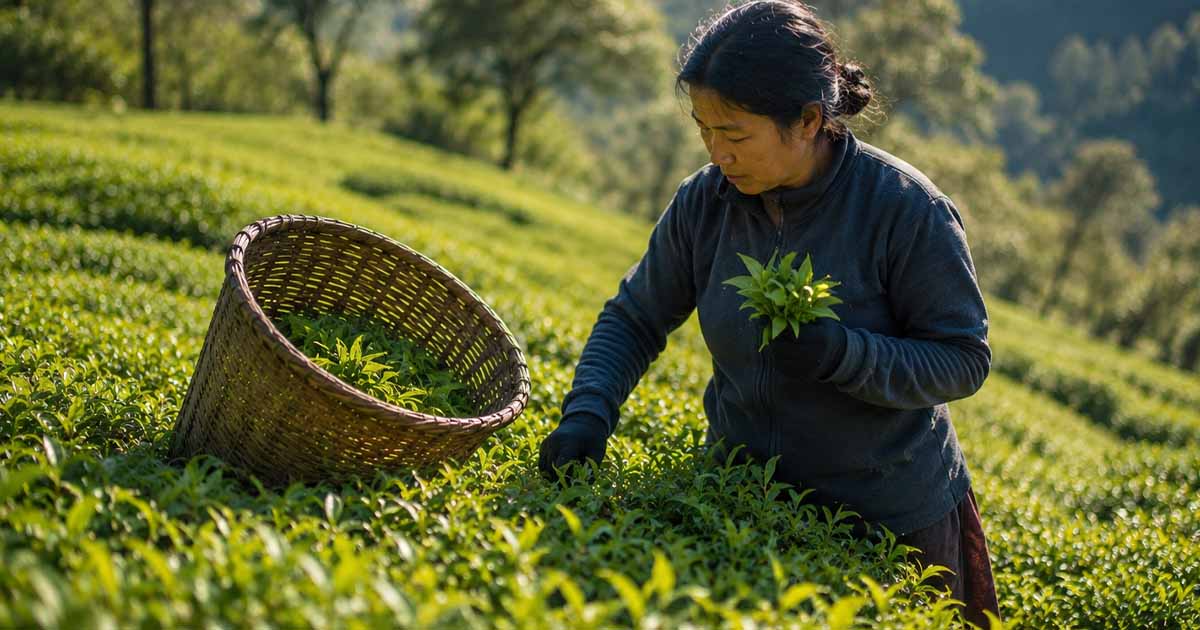
Orthodox tea is produced differently. Only the youngest shoots and leaves are hand-plucked and then processed through specialized methods before drying. The finished product retains the appearance of whole dried leaves rather than granules.
Because production is more labor-intensive and costly, Orthodox tea commands a higher price in international markets.
It is mainly produced in Nepal’s hill and Himalayan regions and has traditionally found buyers in India, Japan, Germany and other developed markets.
Calls for Immediate and Long-Term Action
Industry representatives say the immediate priority is restoring exports and clearing the large quantities of tea currently sitting in storage.
They also argue that the government must adopt a longer-term strategy to expand Nepal’s presence in international markets and prevent similar crises in the future.
With foreign currency earnings, rural employment and thousands of farming households tied to the tea sector, entrepreneurs say the issue should not be viewed as a routine trade dispute but as a matter with wider implications for Nepal’s economy and livelihoods.