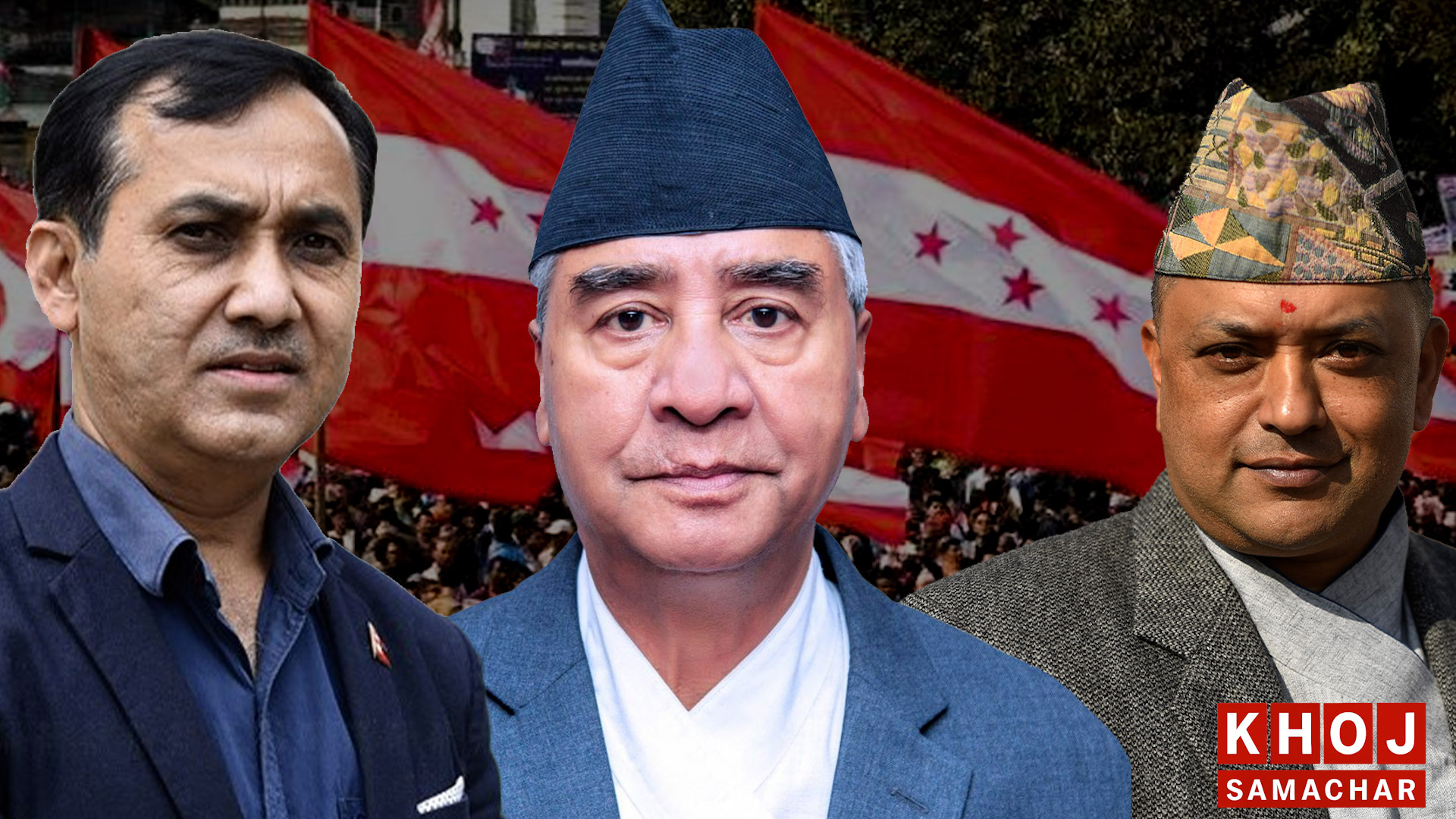
A major political shake-up has emerged within the Nepali Congress, as reports circulating on Friday claim that the Election Commission Nepal has recognized the leadership led by Gagan Thapa as the party’s legitimate authority following a Special General Convention.
According to these developments, the Nepali Congress’ official election symbol—the Tree—along with the party flag, has been allocated to the Gagan Thapa–led faction. If formally upheld, this would make Gagan Thapa the official President of the Nepali Congress, marking one of the most dramatic leadership shifts in the party’s history.
Deuba Camp Faces Political Uncertainty
The reported decision has placed former party president and senior leader Sher Bahadur Deuba and his allies in a politically uncertain position. Throughout the day, both factions had publicly claimed to be the authentic Nepali Congress, intensifying internal tensions and creating confusion among party cadres nationwide.
Sources indicate that the Election Commission’s position favors the leadership elected through the Special Convention, arguing that it represents the party’s most recent organizational mandate. This interpretation has effectively split the party into two camps:
-
Gagan Thapa faction, which claims official recognition
-
Deuba faction, which has rejected the legitimacy of the process
Legal Battle Likely at Supreme Court
Political observers believe the Deuba faction is preparing to challenge the Election Commission’s stance at the Supreme Court of Nepal. Earlier on Friday, leaders close to the Deuba camp warned that they would launch nationwide protests if the party’s official status was handed to the rival faction.
Legal experts note that the court’s response will be crucial in determining whether Nepali Congress reunifies under a single leadership or moves toward a permanent split—potentially leading to the formation of a new political party.
A Turning Point for Nepali Politics
If confirmed, this development could significantly reshape Nepal’s opposition politics. Gagan Thapa, widely viewed as a reform-oriented leader with strong youth support, would gain full institutional control of the country’s oldest democratic party. Meanwhile, the Deuba faction would face difficult choices: accept the new leadership, seek legal remedy, or chart an independent political path.
As of now, the Election Commission has not issued a detailed public statement clarifying the full legal basis of the decision, and all eyes are on the judiciary for the next decisive move.