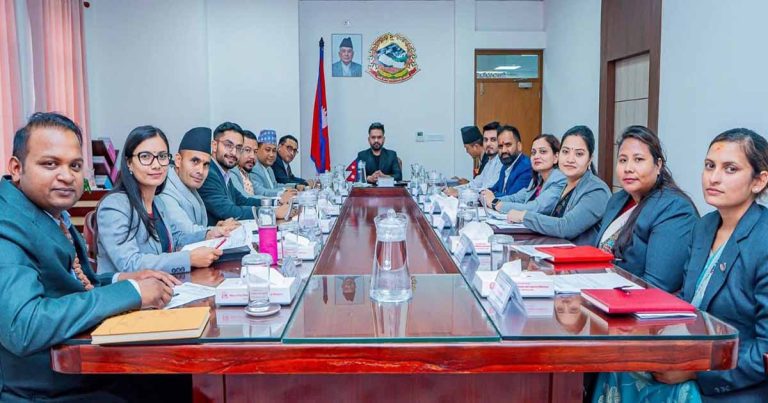
Sobita Gautam Leads Law Commission Act Amendment
The government has invited public feedback on the proposed amendment as it moves to strengthen the Nepal Law Commission's role in drafting government legislation and advance wider legal reforms.



The government has opened the draft amendment to the Nepal Law Commission Act, 2063 for public consultation, inviting citizens, legal professionals, academics and other stakeholders to submit their feedback within seven days. The move reflects a wider effort by the Ministry of Law, Justice and Parliamentary Affairs to make lawmaking more participatory before proposed legislation reaches Parliament.
The ministry said suggestions collected through its public consultation portal will be reviewed before the draft bill is finalized. After incorporating relevant recommendations, the proposal will move through the remaining stages of the legislative process.
The consultation comes as the government signals a broader shift in how official bills are prepared. Rather than relying on outside consultants or external agencies for drafting, the ministry wants future government legislation to be prepared directly by the Nepal Law Commission. That, officials say, will require strengthening the commission’s institutional role and technical capacity.
Changing the government’s drafting approach
Law, Justice and Parliamentary Affairs Minister Sobita Gautam said the existing practice of preparing government bills is set to change, with the Nepal Law Commission expected to play the central role in drafting legislation in the future.
The ministry believes this approach will help build a more accountable and consistent legislative process while reinforcing the commission as the state’s principal legal drafting institution.
In recent years, the ministry has increasingly sought public feedback on legal drafts before they are endorsed by the Cabinet. Officials argue that wider consultation not only improves transparency but also produces laws that are more practical and easier to implement.
Law reform declared a national priority
The government has also designated fiscal year 2083/84 as the “Law Reform Year,” placing legislative reform at the centre of its policy agenda.
As part of that campaign, the ministry has already submitted a list of 166 proposed bills to the Federal Parliament. The initiative is intended to make lawmaking more systematic, time-bound and effective through institutional and policy reforms rather than treating legislation as an isolated administrative exercise.
What happens next
Once public comments are reviewed and incorporated where necessary, the amended draft will be forwarded to the Ministry of Finance for its opinion.
The proposal will then be submitted to the Council of Ministers for approval before being registered in the Federal Parliament. If passed by Parliament and authenticated by the President, the amended Nepal Law Commission Act will come into force.

Written by Roshani Shrestha Pathak
Roshani Shrestha Pathak is the English Bureau Chief at Khoj Samachar, overseeing English-language editorial operations and newsroom coordination.

Gyanendra Shahi Comments on Nagdhunga Tunnel Dispute

What Did Gyanendra Shahi Say to His Trolls?

Sobita Gautam Leads Nepal’s 166-Bill Legal Reform Drive
Bishnu Paudel Released Without Bail by Special Court

Industry Ministry Recovers Rs 467 Million in Unpaid Rent

Rekha Thapa Criticises Taxes, Says ‘Swarnim Nepal’

Supreme Court Orders Immediate Release of Former UML MP Koiri