Bhutanese Refugee Scam: 16 Convicted, 7 Acquitted, 8 Fled
Kathmandu court convicts 16, including a former deputy PM and home minister, acquits 7, and leaves 8 still at large; sentencing due July 13


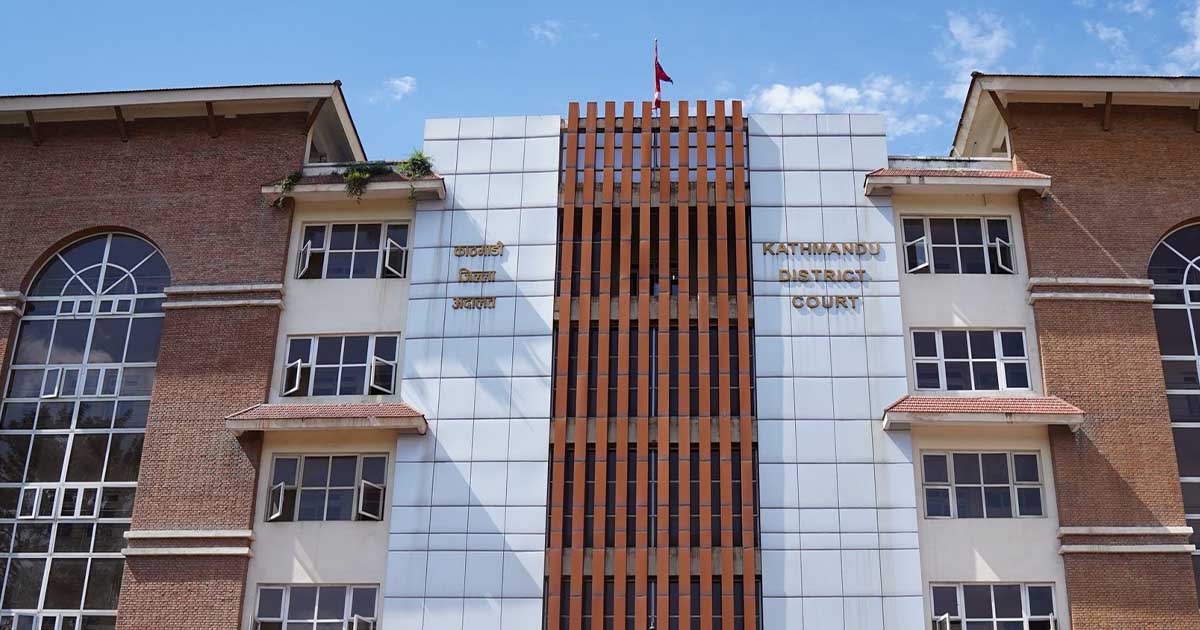
A Kathmandu court has closed the book on one of Nepal’s most politically damaging fraud cases — the fake Bhutanese refugee scandal that first surfaced during Pushpa Kamal Dahal’s tenure. The Kathmandu District Court on Tuesday convicted 16 of the 31 accused, acquitted 7, and left 8 still at large.
The case exposed a scheme in which Nepali citizens were dressed up on paper as Bhutanese refugees and sold the promise of resettlement in the United States, for a price.
Who Was Convicted
The list of convicted names reads like a who’s who of Nepal’s political establishment.
- Balkrishna Khan, former Home Minister and senior Nepali Congress leader, found guilty as an accomplice in organized crime
- Top Bahadur Rayamajhi, former Deputy Prime Minister and senior CPN-UML leader, convicted of organized crime and offences against the state
- Indrajit Rai, a former adviser to Ram Bahadur Thapa “Badal” — the then Home Minister and current CPN-UML parliamentary party leader — convicted on the same charges
- Tek Narayan Panday, former Home Secretary, convicted of forging government documents along with organized crime and offences against the state
- Tek Nath Rizal, long known as a leader of the Bhutanese refugee community, convicted of document forgery and acting as an accomplice in organized crime
- Keshav Prasad Dulal, described in the case as the central middleman who negotiated with ministers and handled the money, convicted of fraud, forgery and organized crime as the scheme’s chief planner
Ten others were convicted alongside them: Sanu Bhandari, Sagar Rai, Sandesh Sharma, Bikram alias Govinda Kumar Chaudhary, Aadtawa Sherpa, Narendra K.C., Shamsher Miya, Haribhakta Maharjan, Niranjan Kumar Kharel and Bechan Jha.
Jha’s name is worth noting separately. He wasn’t part of the original 30 accused — police arrested him later and filed a supplementary case against him. His conviction brought Tuesday’s total to 16.
Sentencing Still to Come
Conviction is not the end of it. The court will announce sentences on Asar 29 — five days from now. Under Nepali law, in cases carrying a sentence of three years or more, the question of guilt is decided first, and punishment is determined in a separate ruling afterward.
Prosecutors had sought up to seven years in prison and fines up to Rs 70,000 for fraud and forgery, up to five years and Rs 50,000 for organized crime and acts against national interest, plus additional punishment under the combined-offence provision, along with compensation for victims.
Still at Large
Eight of the accused have never been arrested and remain fugitives: Ashok Pokharel, Dhiren Rai, Deepa Humagai, Niraj Rai, Rajesh Aryal, Mohanraj Rai, Binita Sawaden Limbu and Sunil Budhathoki. Their guilt or innocence will only be determined once they are caught.
Acquitted
Seven of the accused walked free with full acquittals: Ramsharan K.C., Tanka Kumar Gurung, Sandeep Rayamajhi, Pratik Thapa, Laxmi Maharjan, Keshav Tuladhar and Ashish Budhathoki.
How the Scheme Worked
The origins of the case go back to the 1990s, when Nepali-speaking Bhutanese refugees, driven out of Bhutan, settled into camps in Jhapa and Morang. Over the following decades, most were resettled to third countries — the United States, Canada, Australia — through a long negotiation between Nepal, Bhutan and the international community.
By 2019, a small number of refugees still remained in Nepal. The government formed a task force under former joint-secretary Balkrishna Panthi, on Jestha 30, 2076, to study their status. That task force’s report listed 429 people cleared for resettlement.
Investigators say that list was quietly padded. Names of ordinary Nepali citizens were added to it, turning them — on paper — into Bhutanese refugees eligible to go to America. Investigation records show the racket had been running since 2076, built entirely around the promise of U.S. resettlement.
- 81 victims initially filed complaints, alleging losses exceeding Rs 13.63 crore
- Each victim is said to have paid between Rs 15 and 20 lakh
- The number of complainants later grew to 106
The case became public on Jestha 18, 2079, when 81 people, led by Gajendra Budhathoki and Ramkumar Regmi, filed a complaint at the Kathmandu Valley Crime Investigation Office. They accused Keshav Dulal and Sanu Bhandari, among others, of collecting crores of rupees on the promise of sending them to America and then failing to deliver.
The charge sheet, filed by the Kathmandu District Government Attorney’s Office, put the total fraud at roughly Rs 28.81 crore across 30 accused, spanning fraud, forgery of government documents, organized crime, acts against national interest, and combined offences. Investigators alleged the network was run in coordination with officials inside the home administration, along with brokers and other operators — with Sanu Bhandari, Keshav Dulal, Indrajit Rai, Sandeep Rayamajhi and Pratik Thapa named as the leadership core, and the remaining 25 accused assigned various operational roles.

Written by Roshan Shrestha
Roshan Shrestha is a Nepali investigative journalist and founder of Khoj Samachar, covering corruption, transparency, and public-interest issues.
Lima Adhikari Urges EU Air Safety List Review

Kulman Ghising: Government Has Energy, Needs Experience
Jaybir Deuba Named in Money Laundering Notice
Why Did an RSP MP Recall Kulman Ghising in Parliament?
Prime Minister’s Office Like Hitler’s Gas Chamber: Lawmaker
Speaker Aryal: Learn Parliament, Not Your Phone
Four Former PMs Share Stage at Madan Bhandari Event