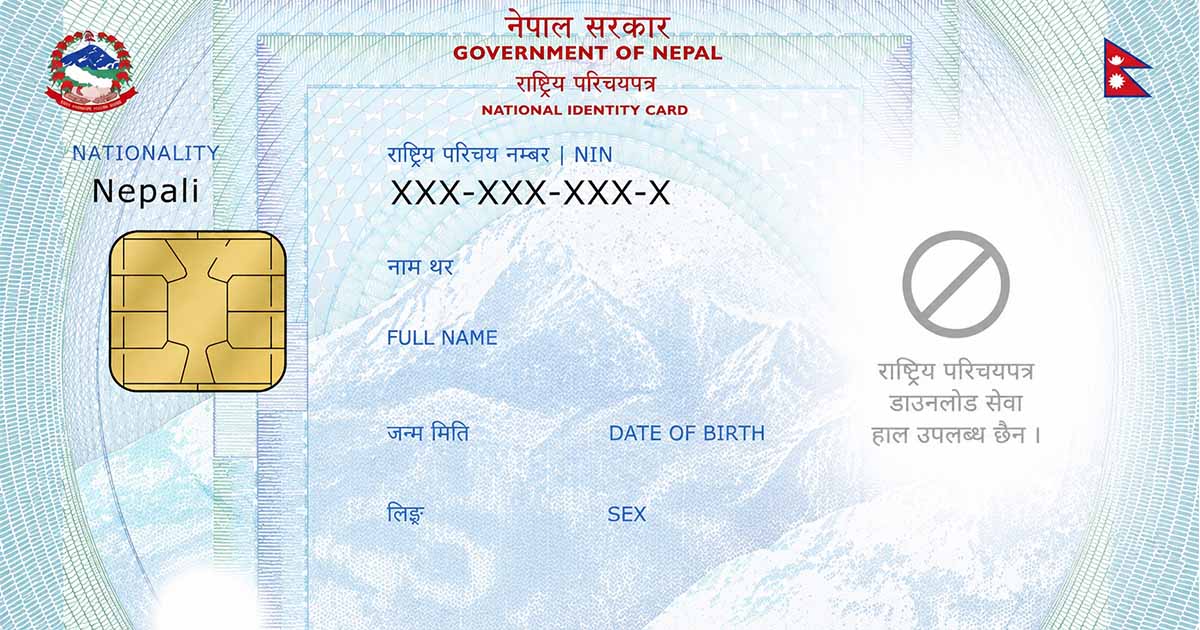
Although the government introduced a system last Wednesday allowing citizens to download their National Identity Cards directly from their mobile phones at home, Khoj Samachar on June 20, 2026 published a detailed video report and news article highlighting a serious security concern that could potentially expose the personal data of millions of Nepalis to scammers.
What Did Khoj Samachar Reveal?
In its investigation, Khoj Samachar found that anyone could view or download a National Identity Card without any OTP verification or additional authentication. According to the process available at the time, simply knowing a person’s name, date of birth, and citizenship issuance date appeared to be enough to access their National ID card.
Khoj Samachar raised concerns that such a system could make it significantly easier for sensitive personal information belonging to millions of Nepalis to fall into the wrong hands.
The video report produced by Khoj Samachar on this issue has so far received more than 61,000 likes, over 1,000 comments, and more than 2,300 shares on Facebook. Watch the video
Similarly, the news article published on the Nepali edition of the website has been shared more than 1,800 times. Read the article
In the comments section of the Facebook video, many viewers urged the government to immediately address what they viewed as a serious security flaw. Others criticized Khoj Samachar and its founder Roshan Shrestha, accusing the publication of targeting the government.
National ID Download Service Disabled Within 24 Hours
Less than 24 hours after Khoj Samachar published its report and video highlighting the issue, the National ID download feature became unavailable.
At present, the relevant government webpage no longer loads, and the option to download National Identity Cards has also been removed from the Citizen Portal.
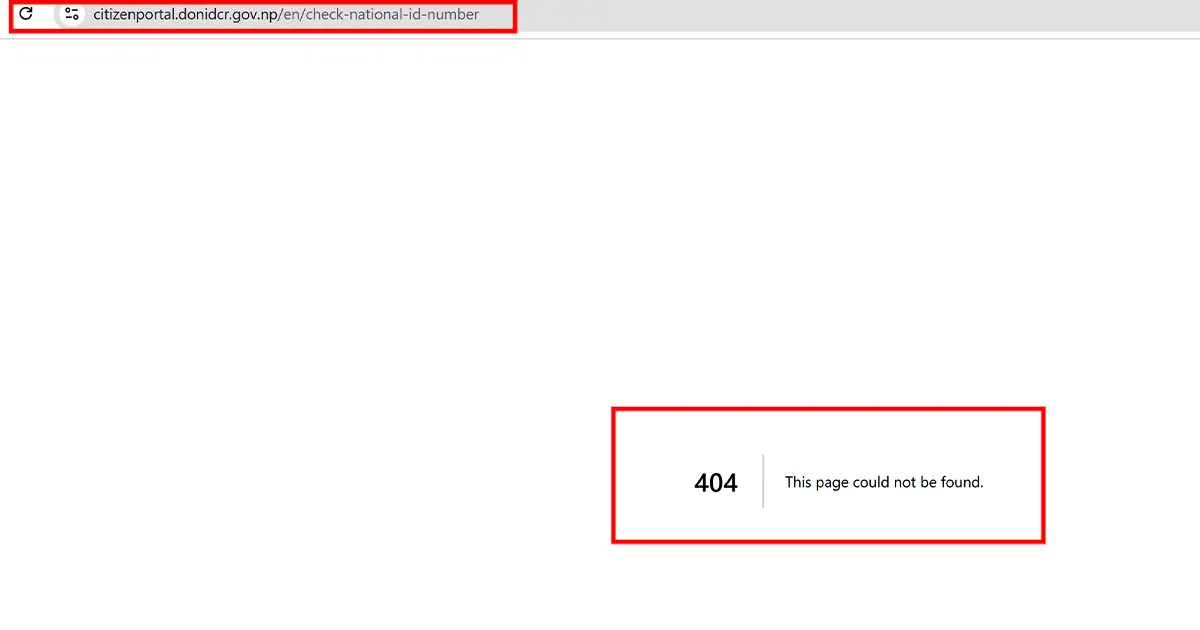
The webpage associated with the National ID download service is currently unavailable and displays a 404 (Page Not Found) error.
What Solutions Had Khoj Samachar Suggested?
Khoj Samachar’s original investigation did not only identify the problem. It also proposed possible measures that could help strengthen the security of the system.
The publication suggested two key improvements to better protect citizens’ personal information.
First, it recommended making OTP-based verification mandatory before users are allowed to view or download their National Identity Cards.
Second, if implementing OTP verification immediately is not feasible, Khoj Samachar suggested limiting National ID downloads exclusively to the Nagarik App, where additional layers of authentication already exist.
What Happens Next?
The National ID download service has been disabled within 24 hours of Khoj Samachar publicly raising concerns about the security vulnerability. It is now expected that the relevant authorities will carefully review the issue and introduce necessary safeguards before restoring the service.
Because the National Identity Card system is directly connected to citizens’ personal data, identity information, and privacy, even a small security weakness can have far-reaching consequences if left unaddressed.
Providing digital services that citizens can access from home is an important step forward for Nepal’s digital transformation. However, convenience alone is not enough. Strong security measures must remain the foundation of any system that handles sensitive personal information.
There is now hope that the concerned authorities will use this opportunity to strengthen verification mechanisms, improve data protection measures, and relaunch the National ID download service in a more secure and reliable form for the public.