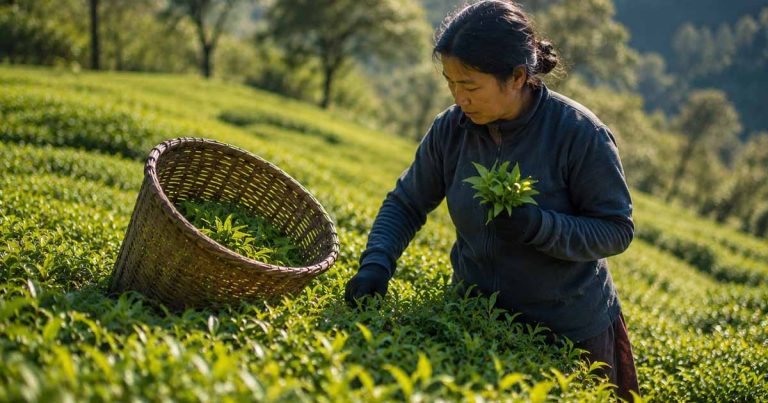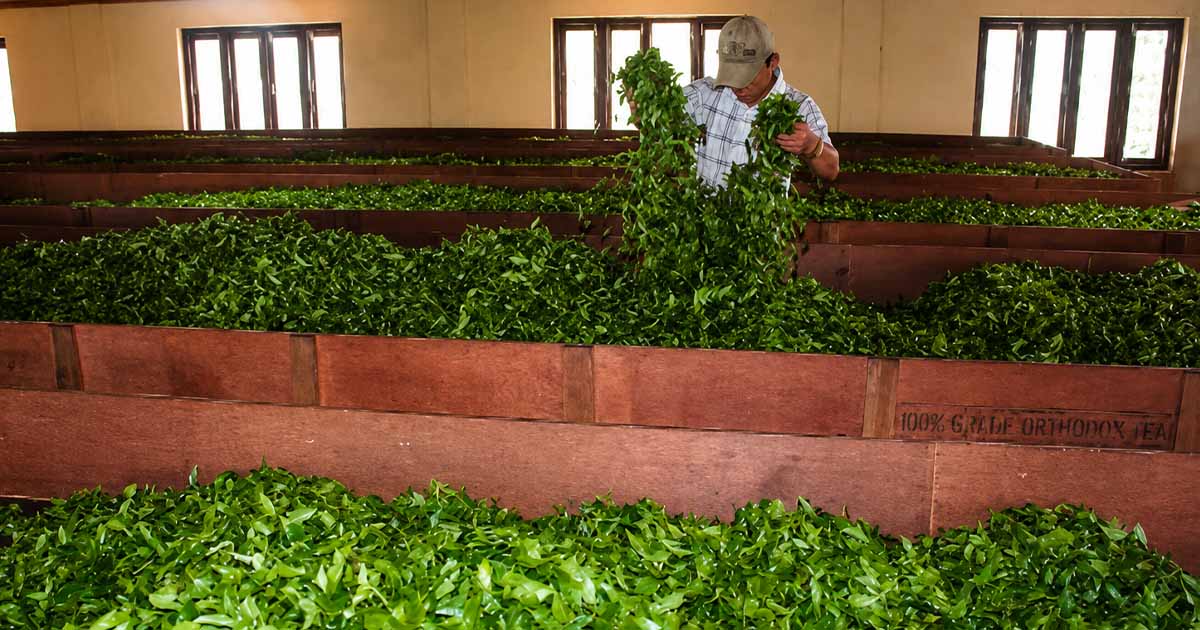
Nepal’s tea sector is facing one of its most serious disruptions in recent years, with factories across the eastern hills and plains suspending operations just as the peak production season gains momentum. Industry representatives warn that unless an immediate solution is found, tea worth billions of rupees could remain unprocessed, leaving farmers to watch their harvest spoil in the fields.
From Thursday, 30 tea factories in Jhapa stopped operations. The shutdown comes after 53 factories in Ilam had already ceased production earlier, taking the total number of closed tea industries nationwide to 83. The crisis has directly affected more than 160,000 workers and dependent family members.
In Jhapa alone, tea entrepreneurs say over 60,000 workers now face uncertainty over their jobs.
Export Bottleneck Hits an Industry Built Around India
The immediate trigger behind the shutdowns is the disruption in Nepal’s tea exports to India, the primary market for Nepali tea.
Tea producers say India has begun implementing a new Standard Operating Procedure (SOP) from 2026 that requires separate testing of every tea consignment entering the country. Industry officials argue that obtaining laboratory reports can take between 15 and 20 days, forcing trucks carrying tea to remain stranded at border points.
The delays have increased costs for exporters and created uncertainty among Indian buyers, many of whom have reportedly become reluctant to purchase Nepali tea under the current system.
For an industry that depends heavily on smooth cross-border movement, even short disruptions can quickly cascade from exporters to factories and eventually to farmers.
Recognition Abroad, Restrictions Next Door
Industry stakeholders question why Nepali tea is facing obstacles despite receiving international recognition for quality.
Nepali tea companies recently secured gold and silver awards at the Second International Tea Quality Competition held in China. Nepal’s Himalayan Gold Black Tea has also been recognized as the world’s best black tea at the North American Tea Championship.
The government has already introduced the “Nepal Tea – Quality from the Himalayas” certification mark in an effort to strengthen the product’s international identity and quality assurance.
Yet factories say the issue today is not demand or quality. It is access to market.
Competition Concerns Surface
Some industry figures believe commercial competition may also be influencing the situation.
Orthodox tea produced in Ilam and other eastern hill districts has steadily gained visibility in international markets. Producers argue that Nepali tea has benefited from a combination of competitive pricing and strong quality standards.
They point to challenges facing some older tea estates in Darjeeling, where many plantations have been operating for more than a century. As Nepali tea expands its presence internationally, industry representatives allege that pressure has grown within India to impose stricter requirements on imports from Nepal.
They argue that the current rules have made it significantly harder for Nepali tea to compete in the Indian market.
Questions Over Timing
The dispute has also revived broader concerns about the nature of Nepal-India trade relations.
India remains Nepal’s largest trading partner. Nepal imports the vast majority of its goods from India, while India exports far more to Nepal than it imports from the country.
Against that backdrop, tea sector representatives question the decision to enforce new procedures at a time when tea plucking and export activities are already underway. They argue that introducing complex compliance requirements without adequate preparation or facilitation has placed the burden on farmers, workers and factories rather than large trading entities.
The concern is especially acute because tea is not simply an export commodity in eastern Nepal. Entire local economies depend on it.
Political Instability and a Diplomatic Gap
Industry stakeholders also believe Nepal failed to respond quickly enough when the problem first emerged. The new restrictions coincided with a period of political instability following the Gen-Z movement, which led to changes in political alignments, elections and the formation of a new government. During that period, attention remained focused on domestic political developments.
Tea entrepreneurs argue that stronger diplomatic engagement at an earlier stage—through Nepal’s Embassy in New Delhi and direct communication with India’s Ministry of Commerce and other authorities—might have prevented the situation from escalating.
Instead, they say, delays in government action allowed the problem to grow while exporters, factories and farmers absorbed the consequences.
A National Economic Concern
The shutdown of 83 factories has already affected more than 160,000 workers and family members. For many tea-growing communities, the crisis is no longer an industry issue alone.
Key Developments
- 53 tea factories in Ilam have shut down.
- 30 factories in Jhapa stopped operations from Thursday.
- A total of 83 tea factories are now closed across Nepal.
- More than 160,000 workers and dependent family members have been affected.
- Industry representatives blame export disruptions caused by India’s new testing requirements.
- Tea consignments are facing delays of up to 15–20 days while awaiting laboratory reports.
Industry representatives are calling for immediate government-to-government negotiations with Indian authorities to resolve the export blockage.
At the same time, the crisis has renewed discussion about Nepal’s long-standing dependence on a single market. Many within the sector argue that the country must accelerate efforts to expand tea exports to the United States, Europe, Japan and the Middle East.
Without a short-term diplomatic solution and a longer-term diversification strategy, a crisis that began in the tea sector could increasingly spill into rural employment, agricultural production and the wider economy.