The growing controversy surrounding the former Smart Telecom network has now reached Nepal’s political sphere, with questions being raised about the handling of telecom assets worth billions of rupees during a major transition period in the country’s communications sector.
At the center of the discussion is Member of Parliament Jagadish Kharel, a former journalist who later became communications minister in the interim government formed after the Gen Z movement. Although Kharel has denied wrongdoing and described the allegations as a “media trial,” recent developments, including the arrest of a former Smart Telecom executive, have intensified public attention on the case.
The issue revolves around the transfer and sale of Smart Telecom’s assets after the company failed to clear more than Rs 30 billion in liabilities to the government. Investigators are now examining whether state-owned property was improperly auctioned through banking channels, causing a significant financial loss to the state.
From Television Journalist to National Politics
Jagadish Kharel first gained national recognition as a television journalist known for asking difficult questions to senior political leaders. His sharp interview style and aggressive reporting made him a widely discussed media figure across Nepal.
Following the Gen Z political movement, Kharel unexpectedly entered government as communications minister in the interim administration led by Susila Karki. His appointment surprised many because reports suggested that youth activists had not formally recommended his name for the cabinet.
Despite the surprise appointment, many people initially welcomed the decision because Kharel had built a public image as a tough and outspoken journalist. However, controversy soon followed after reports emerged linking him to the Barbara Foundation, an organization whose membership Kharel later publicly acknowledged.
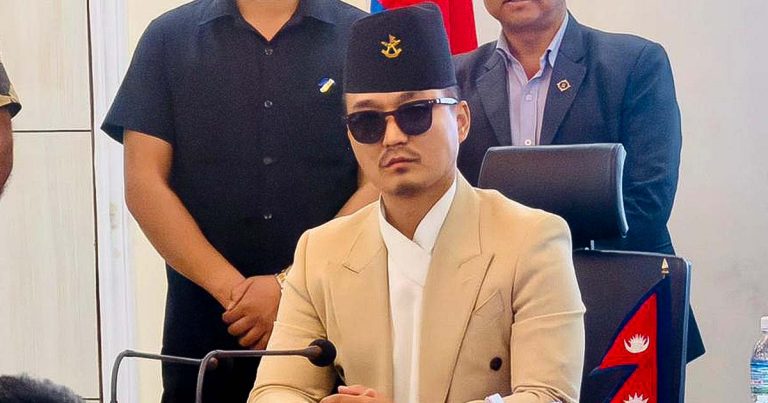
Public criticism also increased after a video circulated online showing Kharel receiving formal military salutes before exiting a vehicle during his time as minister. The footage triggered debate on social media about political culture and the behavior of newly appointed leaders.
Smart Telecom’s Financial Collapse
The controversy now under investigation is tied to Smart Telecom, once one of Nepal’s emerging telecom service providers.
The company received its operating license on April 15, 2013. Over the following years, Smart Telecom expanded rapidly by offering competitive telecom packages and building infrastructure across the country, including towers, offices, and data centers.
During that expansion period, the company reportedly borrowed large amounts of money from banks and financial institutions.
However, by 2022, Smart Telecom had entered severe financial difficulties. At the same time, the company faced the requirement to renew its telecom operating license, which must be renewed every 10 years under Nepal’s telecom regulations.
The Nepal Telecommunications Authority repeatedly asked the company to complete the renewal process, but Smart Telecom was unable to pay the required fees and outstanding dues because of mounting losses.
Authorities later determined that the company owed more than Rs 30 billion to the government under various headings, including license renewal obligations.
Government Cancellation of Smart Telecom License
After repeated warnings and failed payment negotiations, the government eventually revoked Smart Telecom’s license on May 17, 2023.
Before the cancellation, the government had reportedly offered the company an option to pay the outstanding amount in installments rather than a single payment. Even with that arrangement, the company failed to clear its dues.
On May 22, 2023, the Nepal Telecommunications Authority issued a public notice stating that all physical assets belonging to Smart Telecom had effectively come under government ownership because of the unpaid liabilities.
The assets reportedly included:
- Telecom towers across Nepal
- Data centers
- Office infrastructure
- Communication equipment and operational systems
That decision later became the foundation of the current dispute.
Conflict Between Banks and the Government
A major disagreement emerged after banks claimed that Smart Telecom’s assets had been used as collateral for large loans.
Financial institutions argued that they had the legal right to recover their loans through the auction of company assets. On the other hand, government authorities maintained that the assets had already become state property after the company failed to pay more than Rs 30 billion in dues.
The disagreement reportedly continued for nearly two years without a final resolution.
On August 8, 2025, Nepal Investment Mega Bank published a 35-day public notice related to loan recovery procedures involving Smart Telecom assets.
Later, on September 5, 2025, former Smart Telecom Managing Director Sarvesh Joshi reportedly sent a letter agreeing to allow the sale of company assets to settle bank loans.
During this period, the government still maintained its earlier position that the assets belonged to the state.
Ncell Purchase Raises Questions
The controversy deepened after banks moved ahead with the auction process.
On September 20, 2025, another notice was reportedly issued regarding the sale of Smart Telecom assets. Bidding was later opened, and multiple companies submitted offers, including Ncell.
According to reports, two companies offered amounts below Rs 500 million, while Ncell submitted a much higher proposal worth Rs 4.60 billion.
Ncell eventually acquired the assets through the banking process.
The key question now being raised is whether the assets could legally be sold if they had already been declared government property in 2023.
Critics argue that if the government had intervened at that stage, the Rs 4.60 billion generated from the sale might have gone directly into the state treasury instead of being transferred through the banking recovery process.
The issue has now become one of the most debated telecom and governance controversies in recent years.
Former Minister Kharel Responds to Allegations
Jagadish Kharel, who served as communications minister during part of the disputed timeline, has denied wrongdoing.
After reports and social media discussions linked his name to the Smart Telecom case, Kharel traveled to Switzerland and later issued a Facebook statement saying he was facing a “media trial.”
He also warned that he may pursue legal action against those spreading what he described as misleading claims.
Kharel urged his supporters not to panic and insisted that accusations alone should not be treated as proof of misconduct.
At the same time, observers note that questions surrounding his role are likely to continue because the communications ministry was responsible for overseeing telecom-related decisions during the relevant period.
CIB Investigation and Future Legal Process
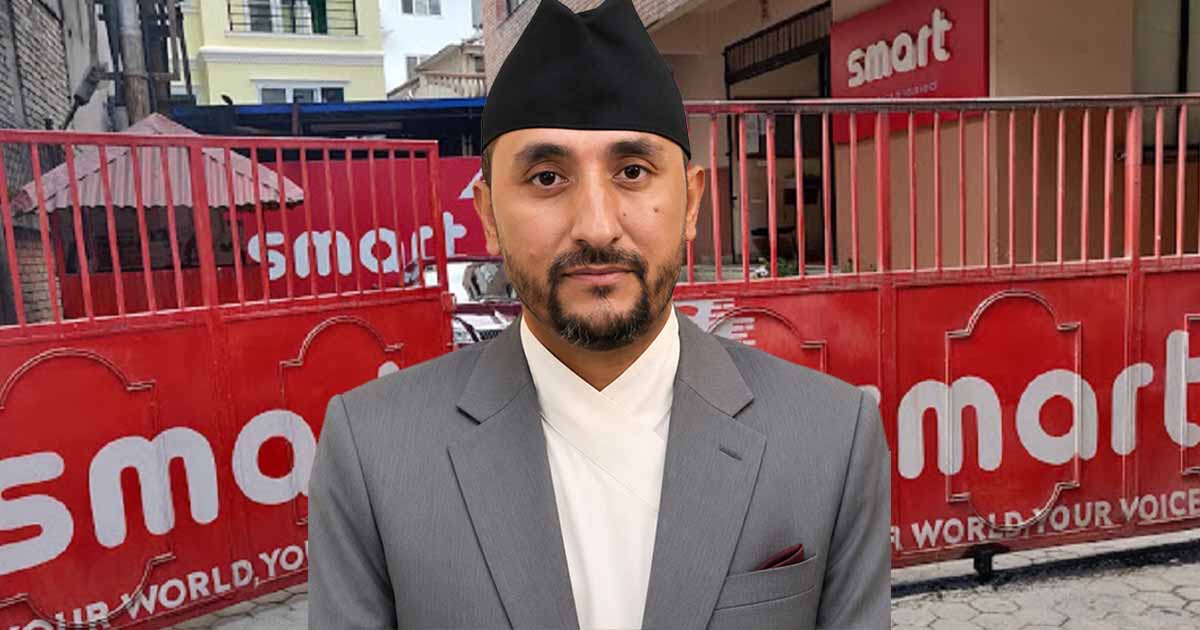
The case entered a new phase after the Central Investigation Bureau recently arrested former Smart Telecom Managing Director Sarvesh Joshi.
Investigators are now reportedly examining whether there was coordination between company officials, financial institutions, telecom authorities, and other stakeholders during the transfer of Smart Telecom assets.
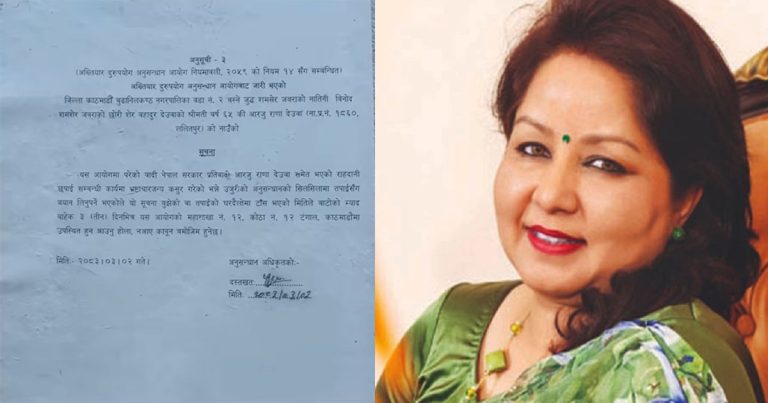
Reports also indicate that a complaint related to the issue has already reached the Commission for the Investigation of Abuse of Authority.
Officials are expected to review several important questions:
- Whether Smart Telecom assets legally belonged to the government after the license cancellation
- Whether banks had authority to auction the assets
- How the Rs 4.60 billion transaction was approved
- Whether any officials failed to stop the process despite legal concerns
- Whether political figures or regulators played any role in the disputed decisions
So far, no formal charges have been filed against Jagadish Kharel, and the allegations against him remain under investigation.
Analysts say the Smart Telecom controversy could become one of Nepal’s most closely watched governance and telecom sector investigations because of the large financial value involved and the possible implications for state accountability.
Watch Full Video Report
This report is also available in video format with detailed explanations about the Smart Telecom controversy, the ongoing investigation, and questions being raised over Jagadish Kharel’s alleged connection to the case.