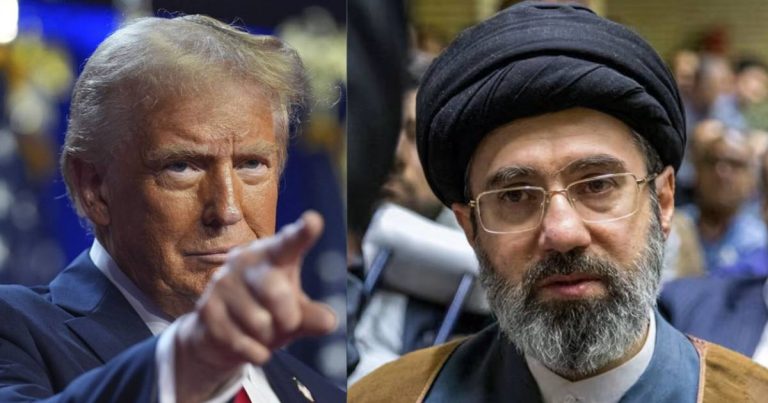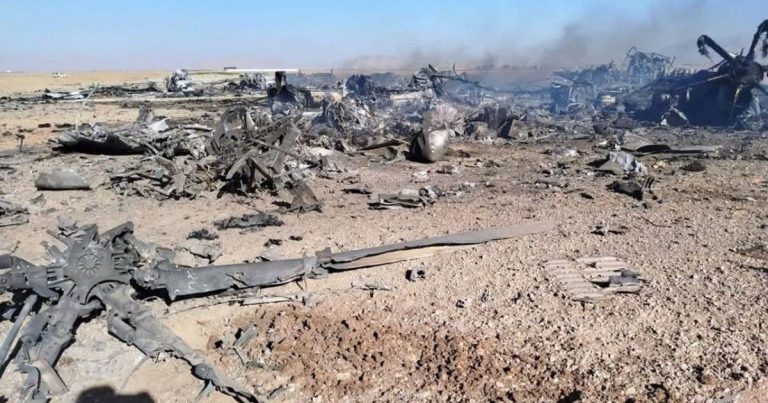
U.S. President Donald Trump has escalated the Trump Iran warning, threatening military action as Iran refuses to reopen the Strait of Hormuz, raising fears of a wider Middle East conflict.
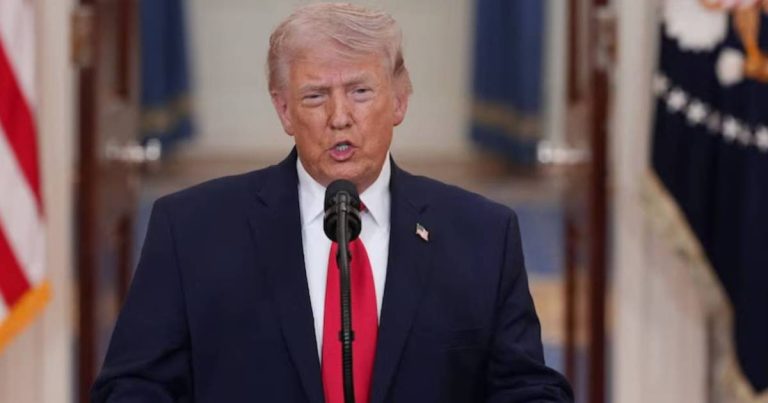
Speaking at the White House, Trump said the United States has the capability to “destroy” Iran’s infrastructure within hours if the key shipping route remains blocked. He claimed that critical assets, including bridges and power plants, could be rendered unusable in a single night, signaling a sharp escalation as his deadline approaches.
Despite the warning, Iranian authorities have maintained their stance, refusing to lift restrictions on the Strait of Hormuz. The waterway is one of the world’s most critical oil transit routes, and any disruption carries major global economic consequences. The ongoing standoff has heightened concerns of a broader regional conflict as tensions remain high across the Gulf.
Trump also suggested that in the event of war, the United States could take control of Iran’s oil resources, framing it as a possible outcome of victory. His remarks have further intensified fears of direct military confrontation between the two sides.
Diplomatic Efforts Struggle as Tensions Rise
Efforts to de-escalate the crisis continue but face growing obstacles. A proposed ceasefire framework, backed by regional mediation, included reopening the Strait of Hormuz and launching broader peace talks within weeks. However, Iran rejected the proposal and instead submitted a wider set of conditions focusing on long-term security guarantees, sanctions relief, and reconstruction.
The Trump Iran warning has further complicated negotiations, with Tehran signaling it prefers a comprehensive settlement rather than a temporary ceasefire. Iranian officials have emphasized resolving not only the current conflict but also wider instability in the Gulf, including safe maritime access and economic recovery.
Meanwhile, diplomatic channels remain active. Countries such as Pakistan, Egypt, and Turkey are making last-minute efforts to broker a deal. Indirect communication between U.S. envoy Steve Witkoff and Iranian Foreign Minister Abbas Araghchi is also continuing, indicating that dialogue has not fully collapsed.
As the deadline approaches, uncertainty continues to grow over whether diplomacy can prevent escalation. The Trump Iran warning has pushed the region to a critical point, with global energy security and geopolitical stability hanging in the balance.