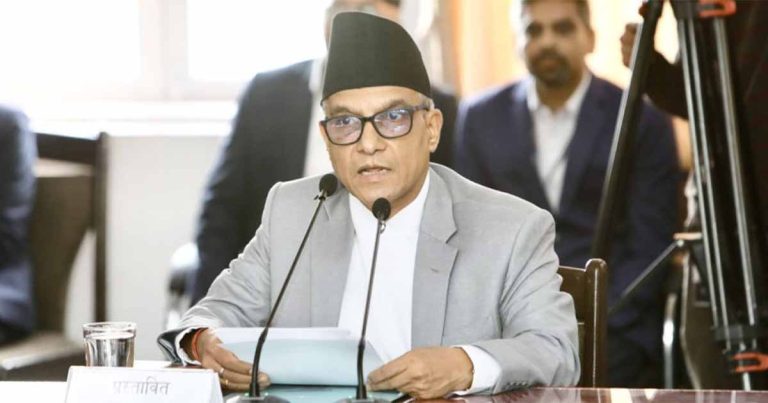
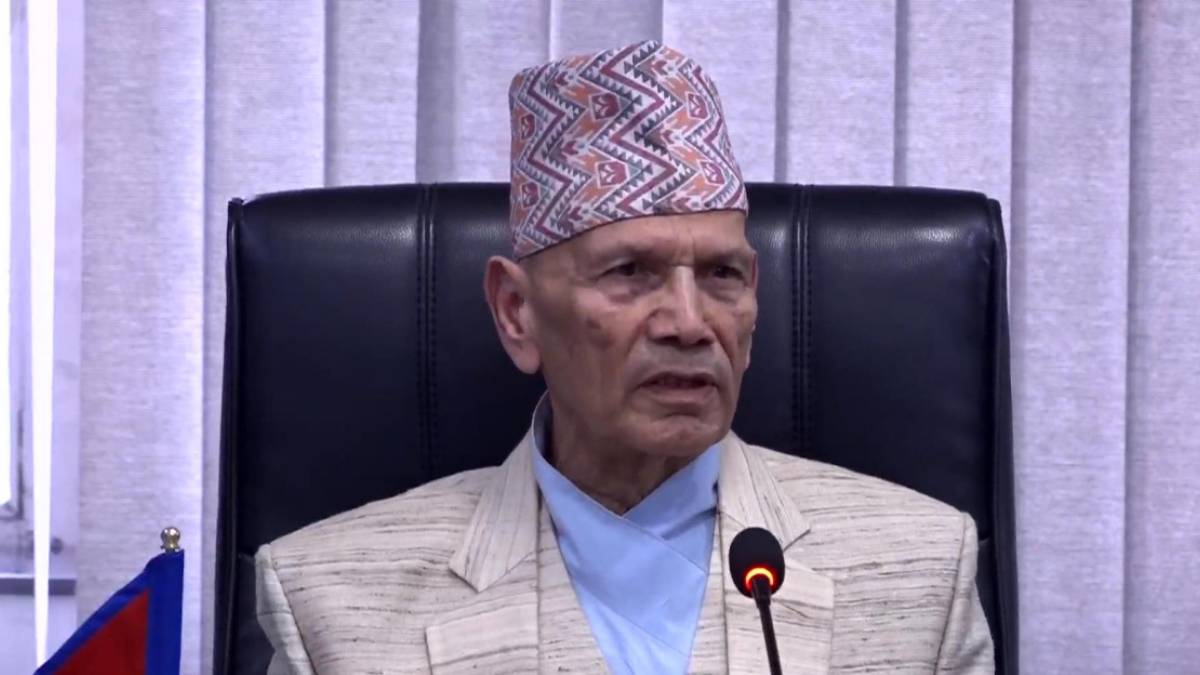
Kathmandu — Nepal’s interim Foreign Minister Balanand Sharma has said the government has begun preparations to rescue Nepali citizens living in conflict-affected regions, including the Middle East, if evacuation becomes necessary.
Speaking at a press conference at the Ministry of Foreign Affairs, Sharma said the government has started making advance preparations rather than waiting for the situation to worsen. He said the ministry has already established a “Situation Center” to monitor the condition of Nepali citizens living abroad and to coordinate possible rescue operations if needed.
Situation Center Established to Track Nepalis Abroad
According to Sharma, the Situation Center will maintain updated records of Nepali citizens living overseas, including information about where they are located and their current situation.
He said the system will help the government collect data and maintain a reliable base that can be used if rescue operations are required in the future. The minister noted that managing evacuation operations would be challenging because of the large number of Nepalis living abroad.
According to government estimates, about 1.9 to 2 million Nepalis are currently abroad through formal channels, while the total number could reach 2.5 to 3 million when including those working through informal arrangements.
Sharma said evacuating such a large number of people would require national-level planning and strong logistical preparation.
Migrant Workers’ Economic Realities
Responding to public questions about why Nepali workers are not immediately brought home when conflicts occur in the Middle East, Sharma said migrant workers often face economic pressures that influence their decisions.
He said many Nepalis travel abroad for employment and to send remittances to support their families, which makes them reluctant to return home immediately when tensions rise.
“Our citizens have not gone there to fight wars,” Sharma said. “They have gone abroad for employment because of economic hardship. Even if they return to Nepal, many of them would eventually have to go abroad again for work.”
He also said the government will not abandon its citizens abroad and will take necessary steps if evacuation becomes required. Sharma added that the government is also working to resolve issues faced by a small number of Nepali travelers currently stranded in transit, and their situation is expected to be resolved soon.
Ministry Assessment on Israel–Iran Conflict
The foreign minister also shared the Foreign Ministry’s internal assessment of the ongoing Israel–Iran conflict, saying the confrontation appears to have reached its most intense phase. According to Sharma, the ministry believes the intensity of the conflict may gradually decline in the coming days.
He said the conflict began after attacks on Iran carried out with cooperation between the United States and Israel, and that the declared objectives included targeting Iran’s leadership and destroying its nuclear infrastructure.
“Our analysis suggests that the two declared objectives have largely been achieved,” Sharma said, adding that future developments may involve additional strategic objectives.
Sharma also noted that although some Western countries initially predicted the conflict would end within a few days, the war lasted longer because Iran is fighting to defend its national survival.
However, he said the most difficult stage of the conflict appears to have passed and the intensity of fighting may gradually decrease. He added that Nepali citizens in the region are not currently direct targets of the conflict, but the government will continue monitoring the situation closely.