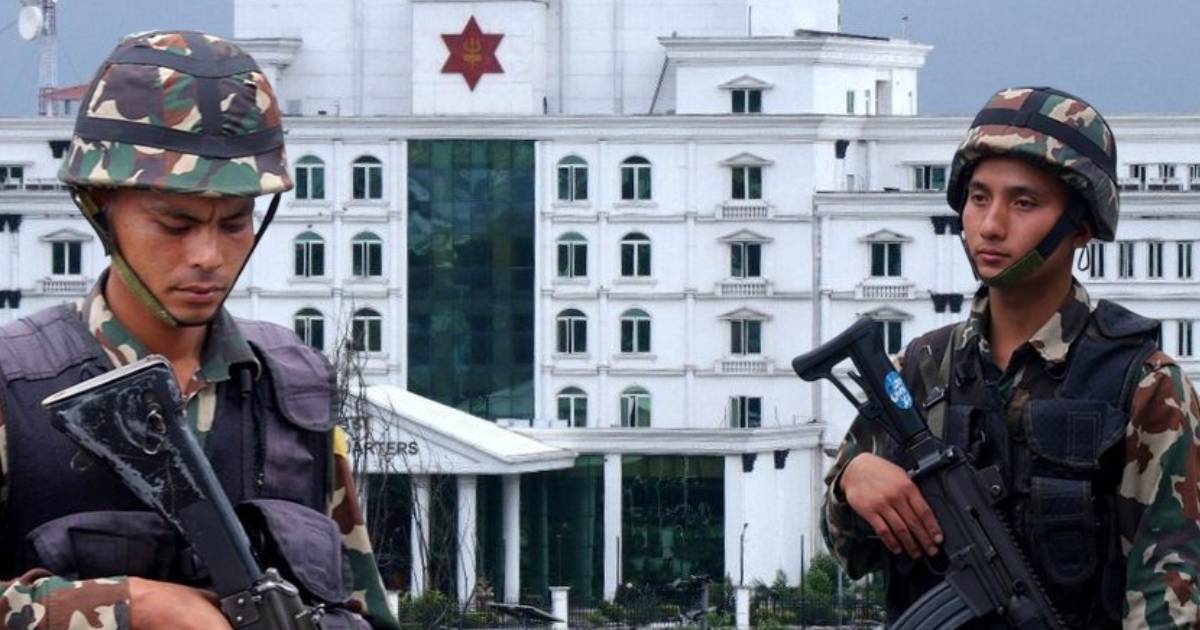
Growing scrutiny has emerged in Nepal after the national army began requesting data on informal settlements across several districts, shortly after evictions in parts of the capital. The move has triggered public concern, with questions raised about the role of the military in matters typically handled by civilian authorities.
The issue gained attention following the removal of informal settlements in Thapathali, Manohara, and Gairigaun in Kathmandu. Soon after, letters sent by army units in districts such as Bardiya and Udayapur seeking updated information on landless residents became public, prompting criticism and debate about jurisdiction and intent.
Evictions in the Capital Spark Wider Debate
The recent clearance of informal settlements in Kathmandu marked a turning point in the ongoing discussion about landless communities. During the operation in Thapathali on April 12, army personnel were seen present at the site. At the time, officials described their presence as coincidental, stating they were transporting logistical materials and happened to pass through the area.
However, the visibility of the army during the eviction has since taken on new significance. The subsequent request for detailed data on informal settlements in other regions has led many to question whether the military is taking on a broader role in managing such issues.
Army Requests Data from Local Authorities
In Bardiya, a letter from a Nepal Army unit asked eight local governments to provide updated information on unmanaged informal settlements and the people living there. A similar request was made in Udayapur, where another army unit contacted the local office of the Land Problem Resolution Commission, seeking prompt submission of data on landless residents.
These letters specifically called for current records of settlements located near riverbanks and other vulnerable areas. The requests included details about the number of households and individuals residing in such locations, raising questions about the purpose behind the data collection.
- Letters sent to multiple local governments in Bardiya
- Request for updated settlement data in Udayapur
- Focus on settlements near rivers and risk-prone areas
- Involvement of local land-related offices
Concerns Over Jurisdiction and Responsibility
Traditionally, the responsibility for addressing landless settlements and managing urban housing falls under civilian ministries. These include the Ministry of Land Management, Cooperatives and Poverty Alleviation, as well as the Ministry of Urban Development.
The involvement of the army in requesting such data has therefore raised concerns about whether it is stepping beyond its defined role. Critics argue that issues related to land ownership, settlement management, and urban planning should remain within the purview of civilian institutions.
The emergence of this debate reflects broader sensitivities around governance, especially when multiple state bodies appear to overlap in responsibilities.
Army Cites Disaster Preparedness as Reason
In response to the criticism, a spokesperson for the Nepal Army clarified that the data collection is linked to disaster preparedness efforts. According to the statement, the focus is on identifying populations living in high-risk areas, particularly along riverbanks where floods and other natural hazards are more likely.
The army emphasized that such data would help in planning rescue operations and ensuring a more effective response during emergencies. Officials stated that understanding how many people live in vulnerable locations allows for better mapping and coordination when disasters occur.
The spokesperson also pointed out that the army has a history of active involvement in disaster response, including rescue and relief operations during natural calamities.
Need for Updated Information Highlighted
Officials explained that the request for updated data is based on the need to maintain accurate records. They noted that previous disaster responses have shown the importance of having reliable information about affected populations.
By collecting recent data, the army aims to improve its readiness for future emergencies. The information would serve as a basis for planning evacuation routes, allocating resources, and coordinating with other agencies during crisis situations.
This approach, according to the army, is not about managing settlements but about ensuring preparedness in areas where risks are known to exist.
Public Reaction and Social Media Criticism
Despite the explanation, the move has sparked criticism, particularly on social media. Many users have questioned why the army is involved in gathering data related to landless communities, arguing that it may signal a shift in its traditional role.
Some critics have expressed concern that the military could become involved in settlement management, a function that is not part of its constitutional mandate. Others have called for greater transparency and clearer communication from authorities to avoid misunderstandings.
The debate reflects a broader concern about maintaining clear boundaries between civilian governance and military responsibilities.
Army Reaffirms Constitutional Limits
Addressing these concerns, the army spokesperson reiterated that the institution would not act beyond its constitutionally defined responsibilities. The statement emphasized that the current initiative is strictly related to disaster preparedness and does not indicate any intention to take over roles assigned to other government bodies.
Officials stressed that the army remains committed to supporting the nation in times of crisis while respecting established legal frameworks. They also highlighted the importance of coordination between different state agencies to ensure effective governance.
As discussions continue, the situation underscores the need for clarity in roles and responsibilities, particularly when dealing with sensitive issues such as informal settlements and disaster risk management.