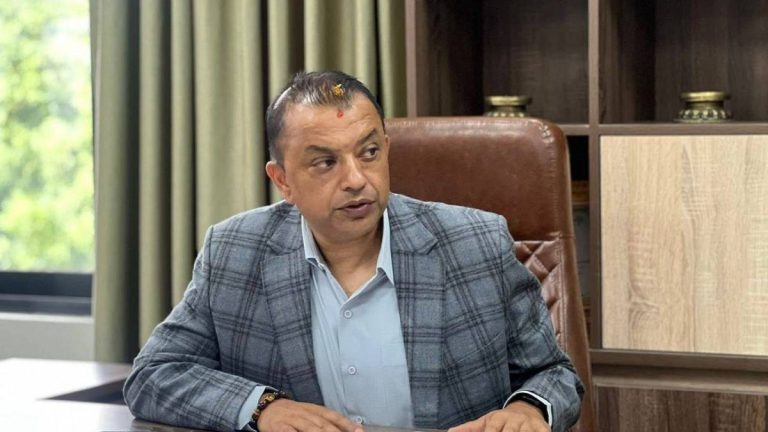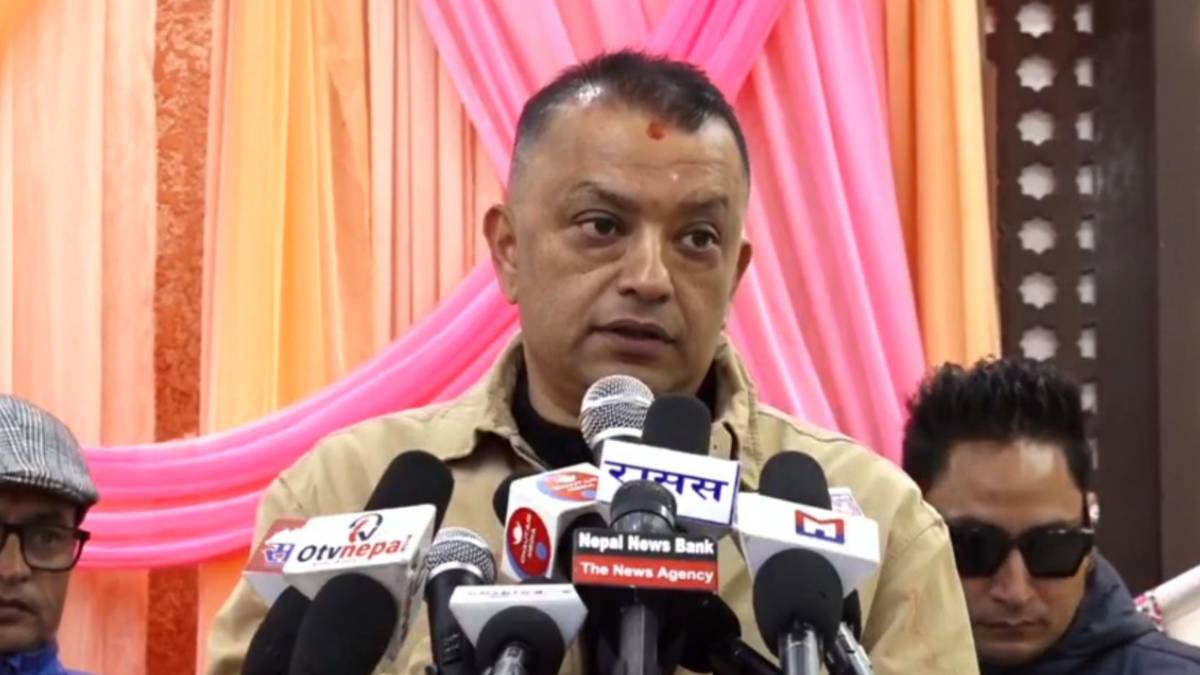
Nepali Congress President Gagan Thapa has said that individuals who previously left the Nepali Congress, the CPN-UML, and the Maoist Centre coming together does not, by itself, make a political force “new.”
Speaking at an interaction program with party workers from Kathmandu Constituency No. 4 on Saturday, Thapa said political newness should be defined by vision and commitment rather than by faces or alliances.
“If someone says this time they will not vote for an old party and will instead vote for a new one, you should pause and ask a simple question,” Thapa said. “What is the definition of old and new? Everything is new at first and becomes old over time. What is the real difference between old and new? This is the question that must be asked.”
Thapa said that if newness is genuinely the standard, the Nepali Congress—following its special general convention—should be considered Nepal’s newest political party.
“The party that held its convention on Magh 6 and elected Gagan Thapa as president is the newest party in Nepal today,” he said. “Which party is newer than this right now? New does not mean new faces; it means a transformed party.”
He said parties currently being described as new have only one objective: winning elections. According to Thapa, many of the individuals involved in such parties had previously left the Nepali Congress, UML, Maoist Centre, and other parties, and have now come together solely for electoral purposes.
“Is that the definition of new?” he asked. “Does new mean that anyone who left the Nepali Congress, UML, or Maoist Centre can come together just to win an election? Is winning elections alone the definition of new?”
Call to Communicate a “Transformed” Nepali Congress
Thapa said the Nepali Congress today is a changed party and instructed party leaders and workers to convey this message directly to the public. “This is not the old Nepali Congress; this is a transformed Nepali Congress,” he said. “You must go door to door and tell people that this Congress can govern the country. The country needs a force that can manage it responsibly.”
Using an analogy, Thapa said destruction is easy, but rebuilding requires wisdom, patience, and accountability. “It is very easy to set things on fire. On Bhadra 24, everything turned to ashes in a single day,” he said. “But to build, you need a conscious and responsible force. You need patience, awareness, and the ability to safeguard the country.”
He said the Nepali Congress has the energy to govern, dreams for the future, an understanding of people’s struggles, and the resolve needed to lead change.