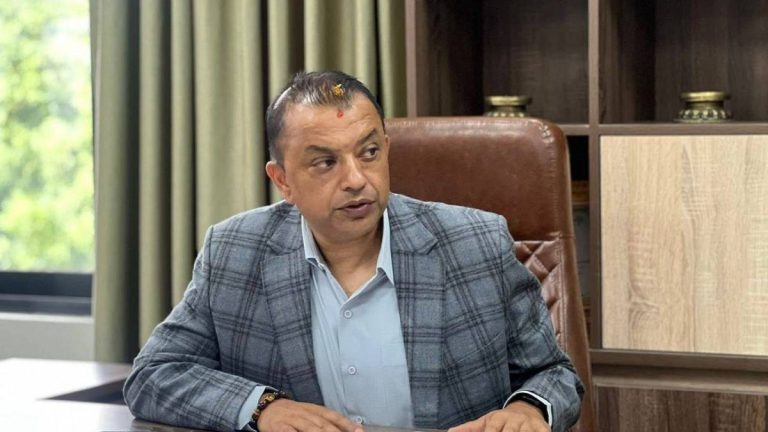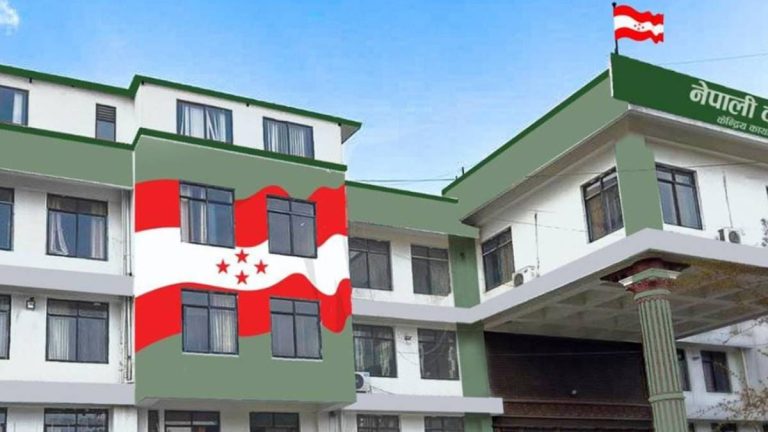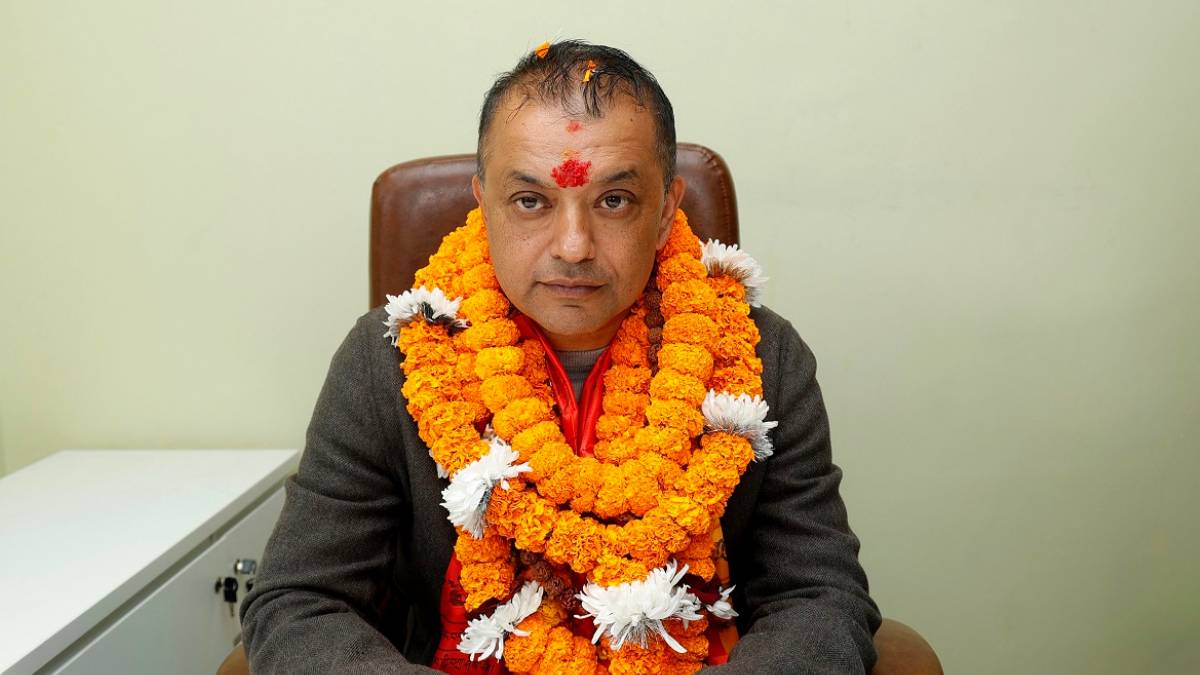
Nine days after being elected through a special general convention, newly appointed Nepali Congress President Gagan Thapa formally assumed office at the party’s central headquarters in Sanepa.
Immediately after Thapa took office, a meeting of the party’s Central Committee was held. The meeting concluded after approving five decisions. Among them, the Central Committee unanimously endorsed Thapa as the party’s future candidate for prime minister.
The proposal to nominate Thapa as the prime ministerial candidate was presented by Vice President Bishwaprakash Sharma and supported by Vice President Pushpa Bhusal. Party spokesperson Devraj Chalise announced the decisions after the meeting.
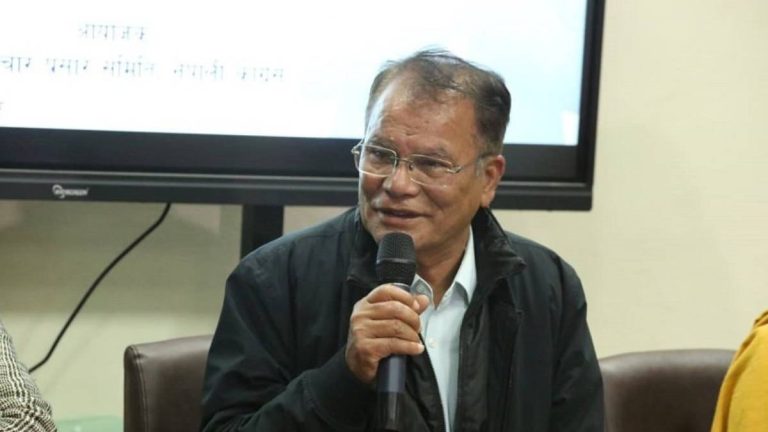
Following the announcement, Vice President Sharma addressed the Central Committee, stating that the decision was taken in view of special circumstances, the need to respond to changing times, the maturity expected of a prime minister, and the ability to remain strong in struggle and effective in governance.
“A person who becomes prime minister must prioritize restraint, composure, and a calm disposition rather than impulse,” Sharma said while speaking at the Central Committee meeting. “We have presented a personality whom we consider most suitable for the position of prime minister.”
Thapa Addresses Party, Pays Tribute to Martyrs and Senior Leaders
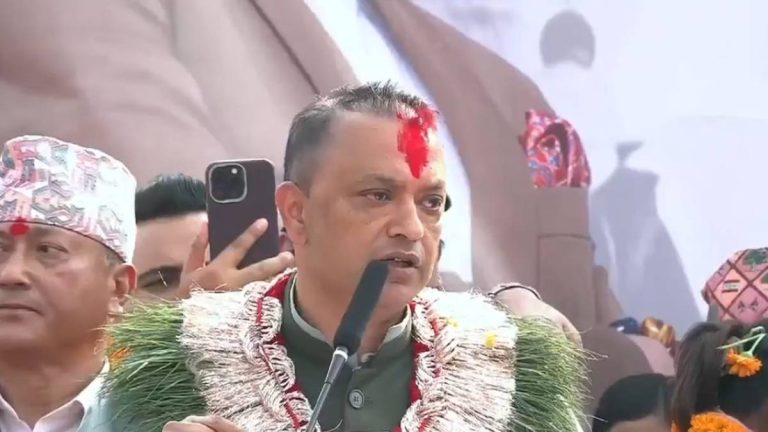
After the Central Committee’s decision, Thapa addressed party members and the media while standing near the main entrance of the Sanepa central office.
At the beginning of his remarks, Thapa remembered all martyrs who sacrificed their lives for the people, from the period before 1951 to recent Gen-Z-led movements. He also acknowledged the families of martyrs and those injured in various movements.
“I would like to remember and pay tribute to all the founding leaders of the party, including Jananayak B.P. Koirala, who are no longer among us,” Thapa said. “I express my respect to all senior leaders of the Nepali Congress, including former party president Sher Bahadur Deuba.”
Former party president Deuba was not present during Thapa’s assumption of office. Along with him, most leaders associated with the Deuba faction, including the former acting president, were also absent. The Deuba faction had opposed the special general convention.
Leaders from the Deuba faction had approached the Supreme Court, challenging the Election Commission’s recognition of the committee elected through the special convention. The Supreme Court declined to issue an interim order, and the final verdict is pending.
After the Supreme Court declined to issue an interim order, youth leaders aligned with the Deuba faction stopped guarding the central office, creating an environment that allowed the committee elected by the special convention to enter the party headquarters.
Historic Chair, Party Transition, and Commitment to Change
Inside the party office, photographs of former party presidents are displayed in the president’s chamber.
Thapa also acknowledged party workers who have contributed to the organization at the grassroots level. He said the leadership had emerged from the special convention and entered the party office through due process, adding that Vice President Bishwaprakash Sharma had escorted him to the president’s chair.
“This chair was once occupied by B.P. Koirala, Subarna Shamsher, Krishna Prasad Bhattarai, Girija Prasad Koirala, and Sushil Koirala,” Thapa said. “It is also the chair once held by respected leader Sher Bahadur Deuba. Sitting on this chair may be easy, but fulfilling the responsibility it carries is extremely challenging, and I understand that.”
Thapa said he expects support from senior leaders, youth members, and party workers in the journey ahead.
“We did not come here through a regular route, nor was this the path we sought,” he said. “However, the founders of our party taught us to listen to the voice of the people. When citizens rooted in this soil call, leadership must listen. Through the special convention, we listened to the people’s voice.”
He said the decision was taken in response to public calls for change within the Nepali Congress.
During the formal assumption of office, Thapa signed the party’s official minute book, writing:
“We change the Congress, we strengthen the nation. With this commitment, we begin a new journey. Our sole objective is national prosperity.”