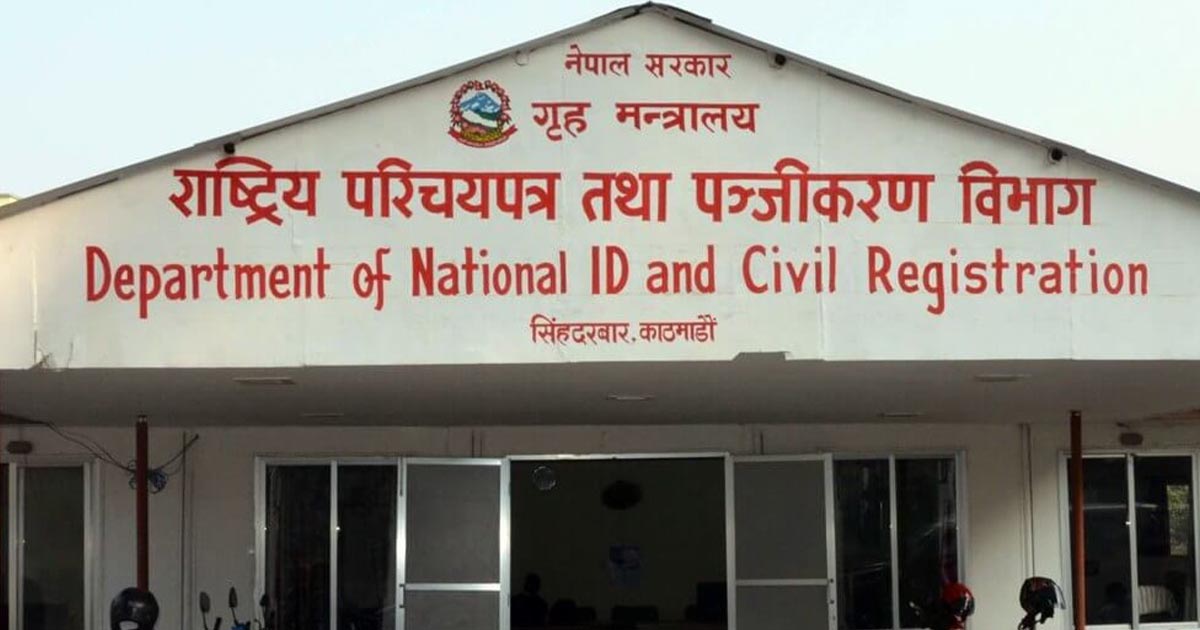
Nepal has decided to take direct responsibility for the printing and management of the National Identity Card system, ending years of reliance on foreign companies for critical technical operations tied to one of the country’s largest biometric databases.
The move comes at a time when more than 20 million Nepalis have already submitted biometric information for the national identity programme. For many citizens, the issue has never been limited to the card itself. It has been about who controls the data behind it.
The National ID system collects highly sensitive personal information, including fingerprints, iris scans and digital signatures. As the programme expanded across the country, concerns persisted that inadequate safeguards could expose citizens’ data to foreign entities or misuse. Some opponents of the project had even argued that the entire programme risked turning Nepal’s population data into a commodity controlled outside the country.
Against that backdrop, the government has now decided to break from the existing arrangement and bring the remaining card printing and data management work under state control.
A Shift in Ownership and Responsibility
Until now, data collection, card production and several technical components of the National Identity Card programme were handled with the involvement of foreign service providers.
The Department responsible for the programme says biometric data has already been collected from more than 20 million Nepali citizens, while over 10 million identity cards have been printed.
The remaining cards are now expected to be produced inside Nepal.
That decision, however, comes with a major challenge. The government must build and maintain the technical infrastructure, security systems and specialist workforce required to manage a database that contains information ranging from ordinary citizens to the country’s highest political leaders.
The National Identity Card currently operates with a chip-based system, making cybersecurity one of the most critical concerns moving forward.
Billions Spent Abroad
The financial dimension of the project has also drawn attention.
For years, Nepal has been paying foreign companies for card production and data management services. Government spending on the system’s establishment, software procurement and the initial printing of 12 million smart cards has already reached an estimated Rs 5 to 6 billion.
The French company IDEMIA was among the foreign providers involved in the programme.
Officials estimate that each card cost roughly two euros, or more than Rs 300, to produce. Additional expenses were incurred annually through software maintenance and licence renewals.
Bringing those services in-house is expected to reduce future outflows of public funds as millions more cards are issued in the coming years.
Data Security and Digital Sovereignty
The government’s decision is being viewed not only as an administrative change but also as a question of digital sovereignty.
For a country that has often depended on external contractors for large-scale technology projects, the National Identity Card system presents a test of whether Nepal can manage sensitive digital infrastructure on its own.
Supporters of the move argue that keeping biometric data, printing operations and technical management within Nepal offers stronger protection for citizen information while creating opportunities for local technology professionals.
The transition could also help channel public spending into domestic data centres, technical capacity building and employment for Nepali IT workers rather than continuing long-term dependence on foreign vendors.
A Bigger Challenge Than Printing Cards
Printing the remaining cards may be the most visible part of the decision. Protecting the database behind them is the harder task.
Managing a national biometric system requires constant cybersecurity monitoring, specialised expertise and long-term investment. The success of the government’s new approach will depend not only on whether cards are printed inside Nepal, but also on whether the state can build public trust that the data of millions of citizens is secure.
As Nepal pushes deeper into a digital era, the National Identity Card project is becoming a measure of how much control the country is willing—and able—to exercise over its own digital future.