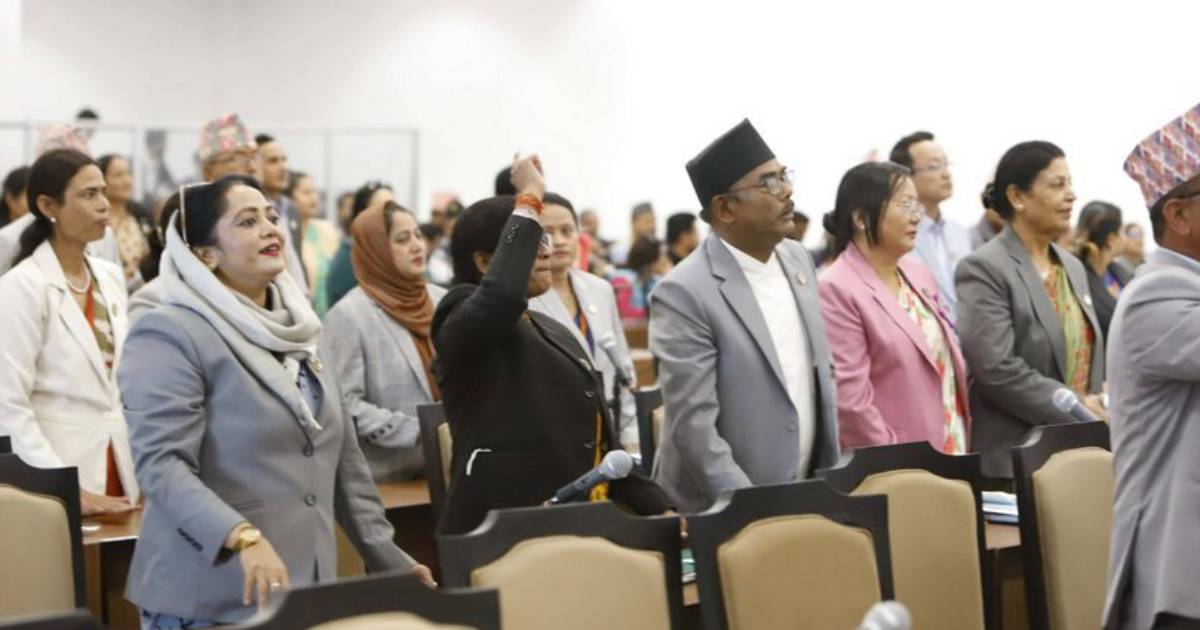
Kathmandu witnessed fresh political tension on Wednesday after opposition lawmakers disrupted a parliamentary session while demanding the resignation of Prime Minister Balen Shah.
The protest began after the prime minister failed to attend the discussion on the government’s policies and programmes in the House. Opposition members rose from their seats in protest, bringing the meeting to a halt and intensifying pressure on the government.
Opposition Parties Disrupt House Proceedings
Lawmakers from opposition parties obstructed the parliamentary meeting after expressing dissatisfaction over the absence of Prime Minister Balen Shah during a key discussion in the House.
The disruption took place during deliberations related to the government’s policy and programme agenda. Opposition members argued that the prime minister’s absence from such an important session was unacceptable and raised serious concerns about accountability inside Parliament.
The protest quickly escalated as lawmakers stood in opposition inside the chamber, preventing the session from moving forward.
Call for Prime Minister’s Resignation
The demand for the prime minister’s resignation was publicly raised by Harka Sampang, chairperson of the Shram Sanskriti Party.
Sampang criticised the prime minister for not being present during the parliamentary discussion and said the absence had undermined the seriousness of the ongoing debate.
Following his statement, lawmakers from opposition parties joined the protest and collectively obstructed the session. The coordinated action reflected growing dissatisfaction among opposition groups over the handling of parliamentary responsibilities.
Absence During Policy Discussion Triggers Reaction
The protest was directly linked to the prime minister’s failure to attend the discussion focused on the government’s policies and programmes.
The policy and programme debate is considered one of the important parliamentary processes, as lawmakers use the platform to question, support or criticise the government’s plans and priorities.
Opposition leaders argued that the prime minister should have been present to respond to concerns raised by members of Parliament. His absence became the central issue that triggered the disruption inside the House.
Political Tension Intensifies Inside Parliament
The parliamentary obstruction highlighted increasing political confrontation between the government and opposition parties.
As opposition lawmakers stood in protest, normal proceedings inside the House were interrupted. The demonstration created a tense atmosphere during the session and shifted focus away from the scheduled policy discussion.
The protest also showed rare unity among opposition lawmakers, who collectively backed the demand raised against the prime minister.
- Opposition lawmakers obstructed the parliamentary meeting
- Prime Minister Balen Shah was absent during the policy discussion
- Harka Sampang demanded the prime minister’s resignation
- Lawmakers from opposition parties joined the protest inside the House
Focus Shifts From Policy Debate to Political Dispute
The disruption meant that attention inside Parliament moved away from the government’s policy and programme agenda and toward the growing political dispute surrounding the prime minister’s absence.
Instead of continuing discussions on government priorities, lawmakers spent the session protesting and voicing objections over the situation.
The incident added further pressure on the government at a time when parliamentary cooperation is considered important for carrying out legislative discussions smoothly.
Parliament Session Faces Continued Uncertainty
The latest obstruction has created uncertainty over how upcoming parliamentary meetings will proceed if tensions between the ruling side and opposition parties continue.
With opposition lawmakers openly demanding the resignation of Prime Minister Balen Shah, the political atmosphere inside Parliament has become increasingly confrontational.
The development also signals that future sessions may continue to face disruptions unless disagreements over parliamentary participation and accountability are addressed.